
How will GenAI and agentic shape customer experience in 2026?
From ChatGPT “turn[ing] product discovery into a conversation” with the launch of its shopping research experience to Google rolling out agentic checkout (and ChatGPT’s introduction of instant checkout), the impact of generative AI on shopping experiences has been a major topic of conversation this year.
Even shoppers who don’t set out to use generative AI may still find their buying decisions influenced by an AI summary in Google or Bing; or find themselves browsing a shopping website with GenAI-powered search.
As we move into 2026, therefore, how do experts in ecommerce and retail media see generative AI shaping ecommerce experiences? Will agentic commerce revolutionise shopping or is it overblown? And how should brands approach loyalty and customer relationships in the midst of this shift? We asked our network for their take.
With thanks to:
- Jean-Christophe Pitié, Chief Marketing Officer at ContentSquare
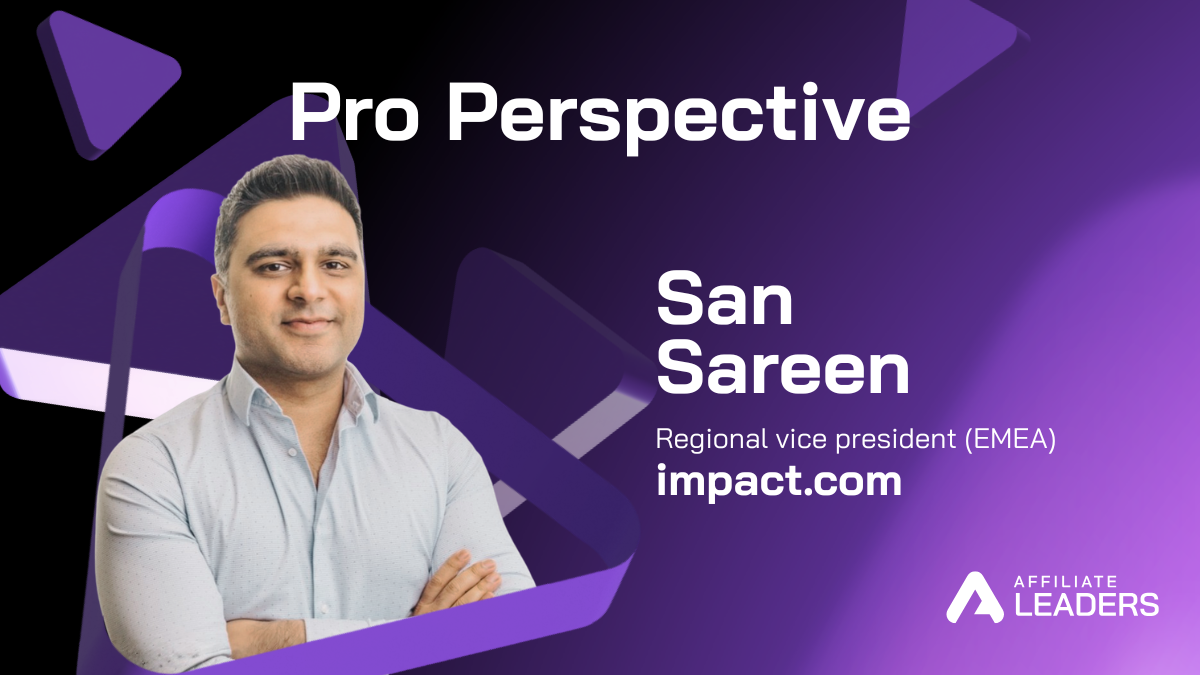
- Cristy Garcia, Chief Marketing Officer at Impact.com
- Paul Dahill, Managing Director, Sales EMEA at Koddi
- Suzanna Chaplin, CEO and Founder at esbconnect
- Rose Keen, Content and Insight Director at Econsultancy and author of Econsultancy’s Ecommerce Trends Quarterly report series
- Richard Robinson, Executive Director at Ingenuity+
- James Taylor, CEO and Founder at Particular Audience
Customers want GenAI that “just works”
Jean-Christophe Pitié, CMO, ContentSquare:
It feels a bit like the early days of ecommerce, when everyone knew the world was about to change but no one could quite predict what it would look like.
Today, brands feel the same about AI. The rules aren’t written yet, but customers are already telling us what they want: interactions that just work, no shiny AI, just AI that’s built into the experience rather than bolted on, and above all, experiences they can trust. In a world where everything gets smarter, trust becomes the real loyalty currency.
Shoppers will happily use AI as long as it feels like part of the retailer’s experience. If it shows up as yet another floating chatbot begging for attention, people ignore it. But when AI quietly powers search, helps compare products, or solves a post-purchase issue in seconds, it suddenly feels like service, not tech for the sake of tech.
And in a tougher economic climate, the smartest retailers are shifting budget away from shiny ‘AI demos’ toward the unsexy stuff that actually moves the needle: analytics, experimentation, design. The truth is, invisible AI is the kind that ends up making the biggest impact.
If [AI] shows up as yet another floating chatbot begging for attention, people ignore it.
AI is quietly becoming the new storefront
Cristy Garcia, CMO, Impact.com:
The biggest elephant in the room is that AI is quietly becoming the new storefront, and most brands have no idea how they appear in AI-generated answers.
As consumers shift from scrolling search results to receiving direct recommendations from AI systems, the signals that drive visibility are changing fast. Commerce content, creator endorsements and trusted sources now shape whether a brand is surfaced or skipped.
The industry talks a lot about “AI disruption,” but the uncomfortable truth is that very few teams are measuring or managing their brand’s authority in this new discovery environment.
Safe bet: By the end of 2026, AI-generated answers will influence more purchase decisions than traditional search results. Brands that don’t understand how they show up in AI-powered discovery will fall behind – often without realising why.
Outrageous prediction: By 2027, every major brand will have a “content authority budget” – a dedicated investment focused on improving how AI systems perceive, rank, and recommend them across the open web. It will sit alongside performance marketing as a core line item.
Paul Dahill, Managing Director, Sales EMEA, Koddi:
Generative AI will dramatically reshape the discovery layer [of ecommerce]. It will help shoppers compare options, understand tradeoffs and refine preferences in ways retailers have never been able to support at scale.
Onsite, AI will improve search, recommendations, content and service. The big unlock is confidence. If AI makes it easier for shoppers to understand their choices, conversions will rise even before agents start transacting autonomously.
Retailers should emphasise value to the customer with GenAI
Suzanna Chaplin, CEO and Founder, esbconnect:
[Generative AI] offers an opportunity to completely rethink ecommerce. An ecommerce store could feel personalised to a user, solve their problem, stop endless scrolling with tailored search results, and reduce returns with better sizing/avatars.
What’s going to hold this back is our ability to imagine, tight margins, and historic systems.
Rose Keen, Content & Insight Director, Econsultancy:
Where we are already starting to see changes to the customer experience is around discovery, with (admittedly still a minority) of customers engaging with models to get recommendations and to plan. That might be a gift for their uncle or their trip to Borneo. Or engagement with B2B tools like Alibaba’s ACCIO for finding suppliers.
This may well shift brands’ competitor sets and creates something else to optimise for.
For retailers, the main opportunity here is to support more personalised experiences through things like better image modelling allowing the customer to see the way clothes would fit on them, personalised communications, and even through generating their own content. Or planning tools like Wayfair’s Muse, which allows you to generate imagery of your redecorated room in a desired style – complete with Wayfair products.
However, it is really difficult to get it right with customer-facing GenAI experiences. We hear more tales of things going wrong than successes. The retailers and brands who appear to of had the most success are those who emphasise the value to the customer, rather than just potential value to the company.
Brands should stop: thoughtless AI driven by FOMO.
Brands should start: thoughtful AI driven by an understanding of the customer, the technologies, and your broader organisational strategy.
It is really difficult to get it right with customer-facing GenAI experiences. We hear more tales of things going wrong than successes.
“We’re building ecommerce for humans, but 2026 shoppers might be AIs”
Richard Robinson, Executive Director, Ingenuity+:
How is generative AI influencing customer experiences in ecommerce? Quietly a lot but loudly not enough. Under the hood, it’s rewriting search, content, and merchandising. 2026 will be the year we see “helpful” chatbots grow teeth and step into their own.
[Right now] we’re building ecommerce for humans, but 2026 shoppers might be AIs. Agentic buying is coming faster than brands can rethink discovery, attribution, and pricing. If you want to win big time you need to move ahead of the curve and talk to the machine.
Loyalty is moving from “collect points” to “collect reasons to come back.” Brands will win by offering usefulness, access, and emotions and not discounts. And yes, they’ll soon need loyalty strategies for AI agents too.
AI orchestrators and commercial technologists, not prompt writers, will be in demand in 2026. This will be the year for people who can blend data, UX, product, and revenue thinking to design automated customer journeys. Nearly every brand now has the tools; almost no-one has the operators.
In 2026, brands should:
Stop: “personalisation at scale.” Most brands can’t even personalise at small.
Start: data hygiene and product metadata. If your information isn’t machine-readable, you disappear in an AI-first discovery world.
Suzanna Chaplin, esbconnect:
I think agentic commerce will be huge – it’s like having a PA. Simple things like: “find me a holiday for X budget – these are the things I like”. Or “analyse my purchase history and prompt me and buy this item when you think I am running low.”
Think about how easily people have adopted LLMs and how many more people you know start searching in ChatGPT first, then Google, and then imagine how quickly agentic commerce will come.
Agentic commerce is still in its infancy
James Taylor, CEO and Founder, Particular Audience:
[Agentic commerce] is definitely overblown, and I expect we are entering the trough of disillusionment after the peak of the hype cycle. Don’t get me wrong, it has great potential, but it is still in its infancy.
In 2026, we will not see agentic AI and AI-powered shopping assistants revolutionise e-commerce as many speculate. Whilst the consumer adoption of AI chat is as big as anything in marketing’s recent history and it is reshaping product discovery, LLMs are still unable to reason to a degree that makes full autonomy probable, and advancement of models has plateaued: scaling compute is no longer the answer, hardware and algorithm R&D is. This will take years, not months.
Rose Keen, Econsultancy:
If widespread adoption happens, agentic commerce will be utterly transformative. But there is an “if” at the start of that statement.
The impact of agentic will go beyond purchases
Paul Dahill, Koddi:
If anything, most of the industry is still underestimating how quickly agents will reshape the upstream parts of the journey. Even before they start completing purchases, agents will influence how demand forms, how shortlists are created and how retail media is bought, optimised and evaluated. That is a massive shift.
…[Agents] will understand user intent at a depth no retailer can match today, and they will make sense of product data across the entire market in real time. When that happens, the retailers who are ready with clean data, fast infrastructure and transparent economics will gain share almost automatically because agents will keep routing demand to the places that perform.
So yes, agentic commerce is early, but it is not overhyped. The impact will show up unevenly, then all at once, and the retailers who treat readiness as a strategic investment rather than a future curiosity will be the ones who benefit most.
Consumers will be hungry for trust in 2026
Rose Keen, Econsultancy:
Honestly, I think we will probably see more GenAI in loyalty in 2026 – not all of it successful.
What I would like to see, though, is an emphasis on trust factors and keeping your promises. With the world increasingly feeling like a low-trust environment, consumers will be hungry for it.
Paul Dahill, Koddi:
Shoppers are becoming more brand-fluid and more mission-driven. They stick with retailers who give them clarity, transparency and a fast, trusted path from discovery to decision.
The smartest retailers are tightening the connection between loyalty, first-party data and onsite experience so that every visit feels personally relevant, not just rewarded.
Cristy Garcia, Impact.com:
Loyalty is shifting from points-based programmes to trust-based ecosystems. Instead of relying solely on promotions, brands are investing in ongoing relationships with creators, commerce publishers, and communities that influence customers earlier in the journey.
Loyalty now begins before a consumer hits the site – when they read a product review, watch a creator demo, or encounter a helpful article. Brands are realising that sustainable loyalty comes from consistent credibility across every surface where a customer makes a decision, not just the owned channels they control.
Also Published in: Econsultancy
More from our team & client partners