
Stop Picking Sides: Let ‘Living Data’ Power Total TV
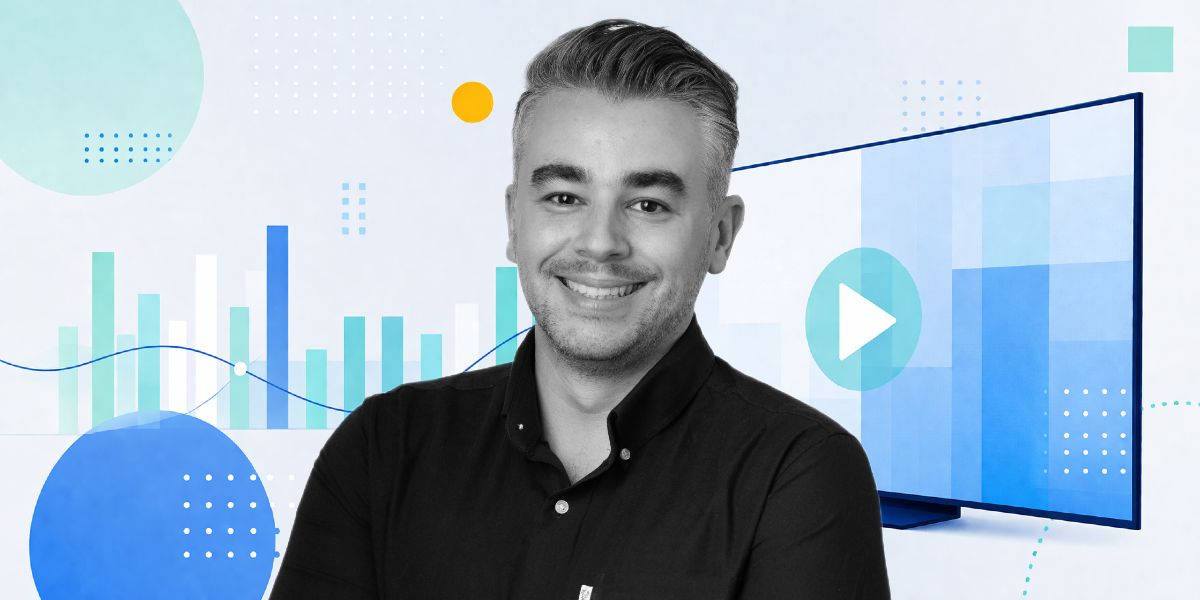
The strongest strategies for using data in CTV recognise that both first-party and third-party data have a role to play, says Matt Bryan, Director of Analytics & Insights at Samsung Ads EMEA. But that doesn’t always happen in practice. In this article, Bryan explores how the concept of ‘living data’ can guide marketers in how to get the most out of data in their CTV campaigns.
The debate around data in TV advertising is still often framed as an either/or scenario: should you use first-party or third-party data? But in a market fragmented in numerous ways across linear, streaming, apps, devices, and viewing moments, the real question is: which signals tell you what viewers are actually doing?
Data from Samsung smart TVs underscores the fragmentation we are seeing in the market, with viewing in Europe increasingly unequally split between streaming (55 percent) and linear (45 percent).
In reality, both first-and third-party data clearly have a role to play in building a complete picture of the audience – but the concept of ‘living data’ helps bring the image into focus.
Trust what the screen tells you
First-party TV data matters because it records behaviour rather than inferring it from a distance. CTV signals can show what households watch on linear, which apps they stream through, how long they spend there, and even when they are using the big screen for gaming.
All of this insight matters because a household may move between broadcast, BVOD, AVOD, and subscription streaming in any given week – and frequently in a single evening. Observed viewing data gives planners a firmer grip on what is really happening.
It also sharpens a point the industry still tends to overlook. An impression does not automatically become effective simply because it lands inside a target audience and sits within a frequency cap. Our research among 1,600 consumers found that ad tolerance changes depending on the viewing moment. Co-viewing can raise tolerance, while highly engaged viewing can lower it. This makes the value of first-party viewing data clearer: it helps planners think about context, timing, and likely receptiveness, rather than just audience identity.
However, that does not make third-party data redundant. In fact, most marketers already recognise that the strongest strategies combine both. Research from Bombora shows that 66 percent of B2B marketers now use a mix of first- and third-party data (compared with 27 percent who rely on first-party data alone, and 6 percent who depend entirely on third-party sources). The reason is simple: each dataset answers a different part of the audience puzzle.
First-party data typically captures down-funnel engagement on owned properties – the moment when a buyer is already researching or considering a brand. Third-party intent signals, by contrast, reveal behaviours that happened before that interaction, helping advertisers understand interest and demand earlier in the decision journey.
When layered together, these signals create a far more complete picture of the audience. Behavioural data from the TV screen shows what people are actually watching, while external signals add the wider context of interests, intent, and purchase behaviour. That’s why the real opportunity lies not in choosing one dataset over another, but in connecting them.
Let the data be your guide
The next step is to stop treating data as a static segment that gets defined once and then left unchanged. TV viewing does not stand still, so the signal layer should not remain static either. What’s more important is continuously refreshed signals from connected TVs – and, increasingly, from mobile devices – that help marketers respond to movement rather than freeze it. This extends the understanding of audiences across the connected home, giving a deeper read on behaviour across the day and across screens. Fresh signals are far more useful than stale certainty.
This shift has direct consequences for planning. In one example, an automotive advertiser reached 40 percent of its ABC1 target audience through linear TV, leaving 60 percent unreached. A closer look showed that 47 percent of that unmet audience was not watching linear at all, which meant that increasing the focus on linear alone was never going to solve the problem. The data then showed where those viewers were actually spending time, revealing unexpected opportunities such as daytime linear viewing and peaks in SVOD usage.
Around a tentpole event like the World Cup, audience value doesn’t sit in one single match or spike in attention. It builds before the main event, shifts during it, and carries on through highlights, shoulder content, and follow-on viewing. That’s where living data changes the picture. It helps a Total TV plan follow behaviour.
It also changes how frequency control and measurement need to work. When viewing is spread across services and screens, the goal is to understand overlap and duplication across the whole plan. This means stronger pre-campaign insight, more precise targeting, smarter optimisation, and clearer cross-media measurement. Data from connected devices can deepen understanding of interests, lifestyles, and cross-screen behaviour. Although static segments still have a place, they can’t keep pace with how audiences move.
The future of Total TV won’t be improved by (incorrectly) thinking that one kind of data is dead. That argument may seem sound, but the reality of the market is messy. Viewers move too often, use too many services, and create too many signals. A smarter approach is to anchor planning in consented first-party viewing data, layer in third-party and advertiser-owned inputs where they add context, and keep refreshing the picture as behaviour changes. Used this way, ‘living data’ makes Total TV planning behave more like the audience itself; fluid, current, and always in motion.
Follow VideoWeek on LinkedIn.
Also published in: VideoWeek
More from our team & client partners