
‘Users won't leave – they'll buy’: Adland on whether or not ads belong in LLMs

The large-language-model (LLM) ads debate has been the talk of adland ever since Anthropic's Super Bowl LX campaign called out its competitors, such as ChatGPT, who are introducing ads onto their platforms.
While the tongue incheek TV and social spots got people talking, OpenAI’s Sam Altman doubled down on ads in ChatGPT, claiming they will have no influence on the responses users receive to their queries.
However, things have changed. The question is no longer, ‘will ads influence responses?’, instead it’s ‘will consumers trust the responses from an LLM with ads?’ – perception may well matter more than policy.
Perplexity clearly thinks so, having recently pulled the plug on its own LLM ads experiment just over a year after its launch. The reason? Trust concerns among users.
This creates even more questions. If users reject ads, how can LLMs ever begin to turn a profit? Have consumers become fed-up of new ad formats? And how will the competitive advertising landscape change if the AI bubble does in fact burst?
In search of answers, PMW canvassed a panel of experts.
Will ads within LLMs deliver for brands and why?
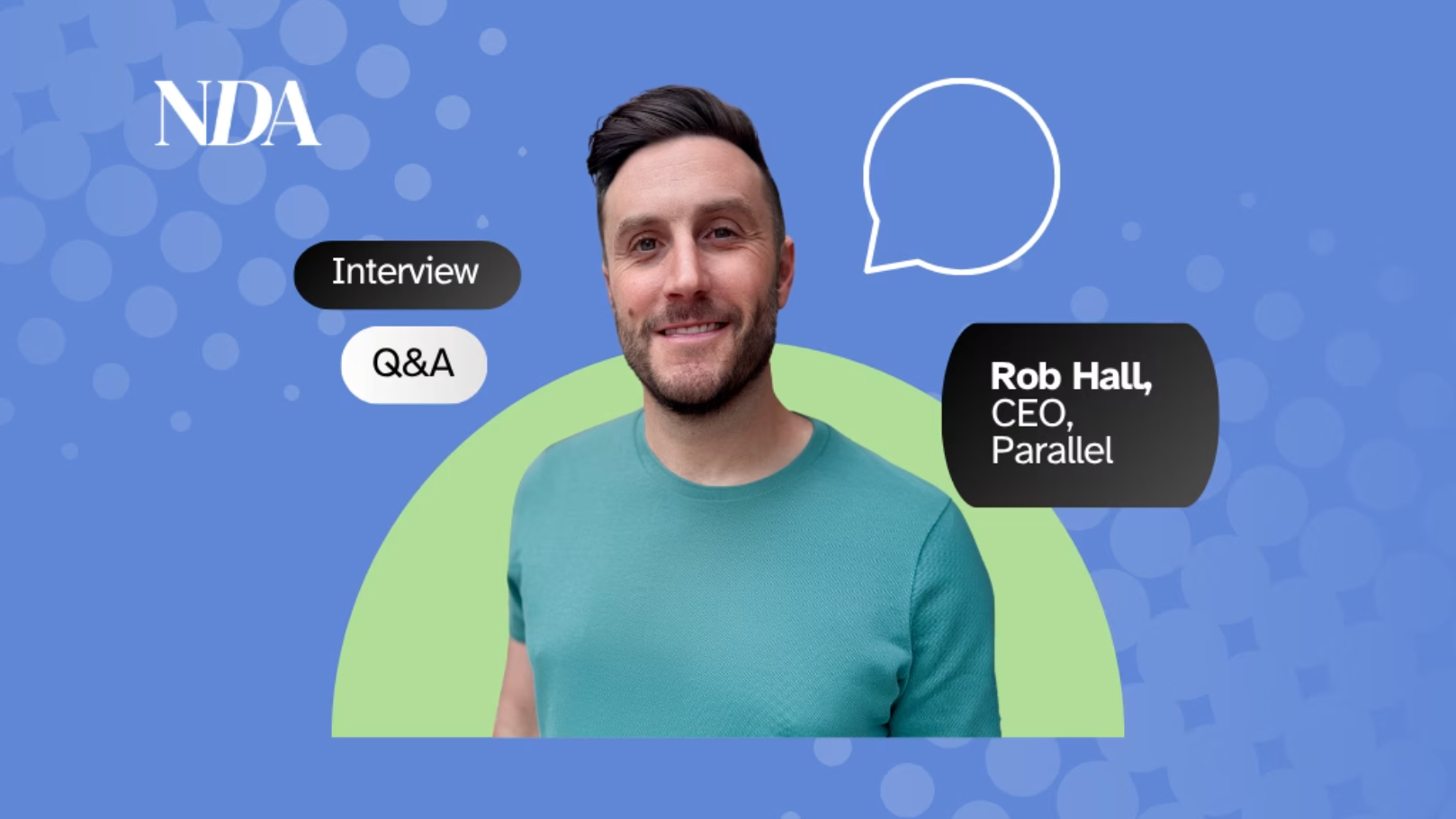
Mike Fantis, VP Managing Partner at DAC Group: “Ads within LLMs can work if the format respects why people are using these tools in the first place. In practice users are looking for non-biased information to help them make informed decisions on very specific queries. Ad formats that feel like they are directing people’s opinion or nudging them towards a particular option undermines that whole premise.
“Those that are more likely to work are product or service-based ads that are connected directly to the AI prompt and conversation – and if they offer instant value. Say someone is looking for the best running trainers, and the ad is from On-Running pushing a survey that helps them find what’s right for their personal needs – who is not going to like this? Context is the key”
James Taylor, CEO and Founder, Particular Audience: “Yes, but only if we stop treating them like traditional search. If an LLM ad is just a link that kicks a user out to a website, it could prove too expensive. AI interfaces are about immediate resolution. For ads to deliver, they need to be functional units – letting users browse, apply loyalty, and check out directly inside the chat. If the ad is the storefront adequately optimised for conversion, it will deliver. If it's a redirect, it's friction subject to the age-old conversion rate inefficiencies of website funnels.”
Tilman Harmeling, Strategy & Market Intelligence at Usercentrics: “Advertising in LLMs will only work if users trust what they're reading. Conversational AI feels neutral and authoritative – so the moment commercial messaging blurs that perception, effectiveness drops. If platforms are transparent about what's sponsored and how data informs responses, ads can deliver. But in AI, opacity isn't just a compliance issue, it's a performance risk.
“Perplexity's retreat is instructive here – even when ads were clearly labelled and didn't influence outputs, the mere presence of advertising triggered a new and distinct fear: that the AI was silently analysing, judging, and acting on users' interests and preferences on behalf of advertisers. That perception – of the model as a covert profiler rather than a neutral assistant – is arguably unprecedented in digital advertising, and it rattled trust in every response, sponsored or not. Brands should remember: if users question the answer, they'll question the ad.”
Ryan Hudson, Founder of ZeroClick: “Yes. It is creating a platform with more context than anything ever created. Think of google keyword search as a proxy for context. LLMs have far more extensive context from logged in, and often paying, users which will allow for high quality attribution tracking that makes it easy to quantify the results.”
Damon Reeve, CEO, Ozone: “When market dynamics work correctly, advertising spend aligns with the areas where consumers spend time, both online and off. LLM use has shifted into the everyday, and if consumers are engaged with what they are generating in AI engines, then there is no reason to suggest that ads in those spaces couldn’t deliver.
“I think a huge part of this comes down to trust, and whether consumers believe the results that they are seeing. For example, the latest results from the Credos Trust Tracker have shown growth in the levels of trust consumers place in ads seen from influencers, but this is also significantly helped by the guardrails that have been enforced on ensuring advertising content is clearly disclosed.
“Credos research has also shown that the biggest drivers of distrust in advertising is bombardment and suspicious advertising. As a relatively ‘clean’ and new space, LLMs are in a good place to avoid the former, whereas there may be more scepticism of the latter if clear and transparent rules of engagement are not in place.”
When should brands invest – is becoming a first mover in the format too risky?
Mike Fantis, VP Managing Partner at DAC Group: “Brands shouldn't jump in just because they can; first ask how your brand will be perceived on the platform and in the context of a particular ad format.”
James Taylor, CEO and Founder, Particular Audience: “The biggest risk by far is waiting. Brands should invest right now, but it's not as simple as testing some budget, they need to focus entirely on the infrastructure that allows their relevant discovery, smart pricing, loyalty benefits and checkout to live natively within these LLM interfaces. The first movers who figure out how to turn conversational AI into a closed-loop point of sale, rather than just a traffic driver, will own the next era of digital commerce. At Retail-MCP.com we’re building some truly phenomenal functional ad unit applications for brands to show up in the AI arena.”
Tilman Harmeling, Strategy & Market Intelligence at Usercentrics: “There’s opportunity in being early, but in AI environments the reputational stakes are higher. First movers need to treat privacy and transparency as product features, not legal footnotes. If brands experiment responsibly – with clear consent and visible monetisation – they can shape best practice. If they rush in without those guardrails, the backlash will outweigh the first-mover advantage. The Perplexity case also shows that platform risk is real – brands that built campaigns around that inventory now have to adapt. Before committing to a budget, brands should be asking not just whether a platform serves ads, but whether it has a credible long-term model for doing so sustainably.”
Ryan Hudson, Founder of ZeroClick: “Immediately. Any time there is a new platform there are 1) opportunities to learn how to use it effectively, and 2) potential arbitrage opportunities while efficient price discovery lags.”
Damon Reeve, CEO, Ozone: “Like any new innovation, there can be significant upsides and downsides to being a first mover. In a space where the technology is moving so fast, the opportunity to replicate another brand’s success may not be possible… The moment may quickly be gone and we’re on to the next new thing.
“However, it will be really important for brands to understand and actively manage how their brand is presented in a LLM environment. Where more established media channels have well established safeguards for brands and consumers alike, it will be up to the LLMs to make sure that brands can trust the space they’re advertising in.
“While some of the LLMs are saying no to advertising at the moment, I would look to other growth stories to see that where significant audience is found, ads are most likely to follow. Where there is opportunity to experiment, brands would be wise to stay ahead of a game that will no doubt intensify in the future.”
Does Perplexity's walk-back on ads indicate that consumers have rejected the format?
Mike Fantis, VP Managing Partner at DAC Group: “I do understand Perplexity’s logic on the roll-out of ‘sponsored follow-ups’. After all, most people have been perfectly happy to accept ads based on the content of the page and/or its audience demographics.
“However, in retrospect the format was always going to struggle in light of the context in which people use LLMs, which typically is that they are more likely to be in top of the funnel research mode, rather than transactional mode. The particular use cases for LLMs are largely fact-finding, comparison and sense-checking. The expectation is that what comes back should be neutral.
“It’s no surprise that there’s been some pushback to Perplexity’s particular approach, but that doesn’t equate to a wholesale rejection of advertising in LLMs. What it does suggest is that the execution needs to align more closely to how users are using these tools.”
James Taylor, CEO and Founder, Particular Audience: “Consumers haven't rejected ads; they’ve rejected bad UX. Perplexity's trust concerns likely stem from trying to wedge legacy ad formats into a new medium. It was lazy. In an LLM, users expect the AI to do the work. When an ad actually solves the user's intent natively – like consulting a buyer and allowing them to complete a purchase right there in the chat – it stops being an interruption and becomes actually useful.”
Ryan Hudson, Founder of ZeroClick: “I don’t think so. I think it reflects their need to have a differentiated product value proposition vs ChatGPT. That combined with the lackluster results from their initial experiments.”
With Perplexity going ad-free, Anthropic ad-free and Gemini also ad-free – how can ChatGPT maintain its userbase while serving ads?
Mike Fantis, VP Managing Partner at DAC Group: “Google has shown that users will tolerate advertising if it’s relevant and clearly distinguished from the core result - and the same rule applies to ChatGPT.
“If the ads don’t compromise the integrity of the LLM's answer, align with intent and – crucially – if the content is useful, most users won’t reject it. Actually, they probably won't even pay too much attention to the fact that it’s an ad at all.”
James Taylor, CEO and Founder, Particular Audience: “ChatGPT Apps were a great idea, they just struggled for adoption and brands invested (or rather didn’t) accordingly. Ads solve the economic gap that AI has when it comes to invoking an app that hasn't been installed by a user. By making the ads genuinely useful, and funding their contextual invocation, ChatGPT is rectifying apps’ distribution, and doing so profitably. If ChatGPT allows brands to execute transactions directly in the chat, the ad actually enhances the user experience. You aren't serving a banner; you are giving the AI the ability to fulfil a commercial request. If ChatGPT gets functional commerce right, users won't leave – they'll buy.”
Tilman Harmeling, Strategy & Market Intelligence at Usercentrics: “Ad-funded models aren't doomed – but they must be radically transparent. The platforms that succeed will be those that clearly separate paid content, explain how data is used, and give users meaningful control. It's also worth noting that the competitive landscape has shifted quickly – Anthropic's Super Bowl campaign directly calling out AI advertising shows that being ad-free is becoming a differentiator, which raises the bar for ChatGPT to demonstrate its approach is genuinely user-centric rather than just commercially convenient. AI users are more sensitive to perceived manipulation than traditional internet users. If monetisation feels hidden, churn follows. If it feels honest, sustainable models are possible.”
Ryan Hudson, Founder of ZeroClick: “Ads can improve the user experience. 1) by offering attractive pricing and usage tiers for users who don’t want to spend $20/month for a premium subscription (most users), and 2) by providing contextually relevant information and offers to users. Most people find google product listing ads additive to their google search experience as just one example of how this can work.”
Additional expert insights
‘This channel will get expensive, and everyone will be on it’
Suzanna Chaplin, CEO, esbconnect:
“Firstly, looking at AI platforms overall, ChatGPT has the advantage – you hear your mum, your neighbour and maybe even your granny saying, ‘I just asked ChatGPT’. When the average Joe thinks of LLMs, they think ChatGPT.
“But do ads fit? I use ChatGPT because I think it’s going to give me an unbiased view, not because it’s being paid to give me an answer. So how will ads feel right in there? Well, the reality is, it might not matter – they have changed people's habits so much that people will default there; other platforms don’t have that advantage.
“But will people go elsewhere because of ads? Probably not, if they are served in the right way – potentially separate to the answer, but relevant to the content, like seeing an ad for a frying pan before watching a cooking tutorial on YouTube.
“The industry is obsessed with consumers not trusting platforms because of ads. But ads aren’t the issue – it’s when your output is biased, and you don’t transparently say you are giving this answer because you’re being paid to do so that it becomes an issue. If ChatGPT can walk this line, I reckon you’ll quickly see the other LLM’s come back to advertising. They are probably just waiting to see how it plays out and enjoy a second-mover advantage.
“So if I were a brand, yes, I would definitely be testing it, but as with any new channel, I wouldn’t be handing over the keys and becoming reliant on it. I would be thinking: how do I get that consumer within my control and use ads to build my consumer base, as this channel will get expensive, and everyone will be on it.”
Read more in: Performance Marketing World
More from our team & client partners