
Rob Hall, CEO of Parallel: “Digital Twins and ‘Customer Suitability’ can power better decisions in media activation”
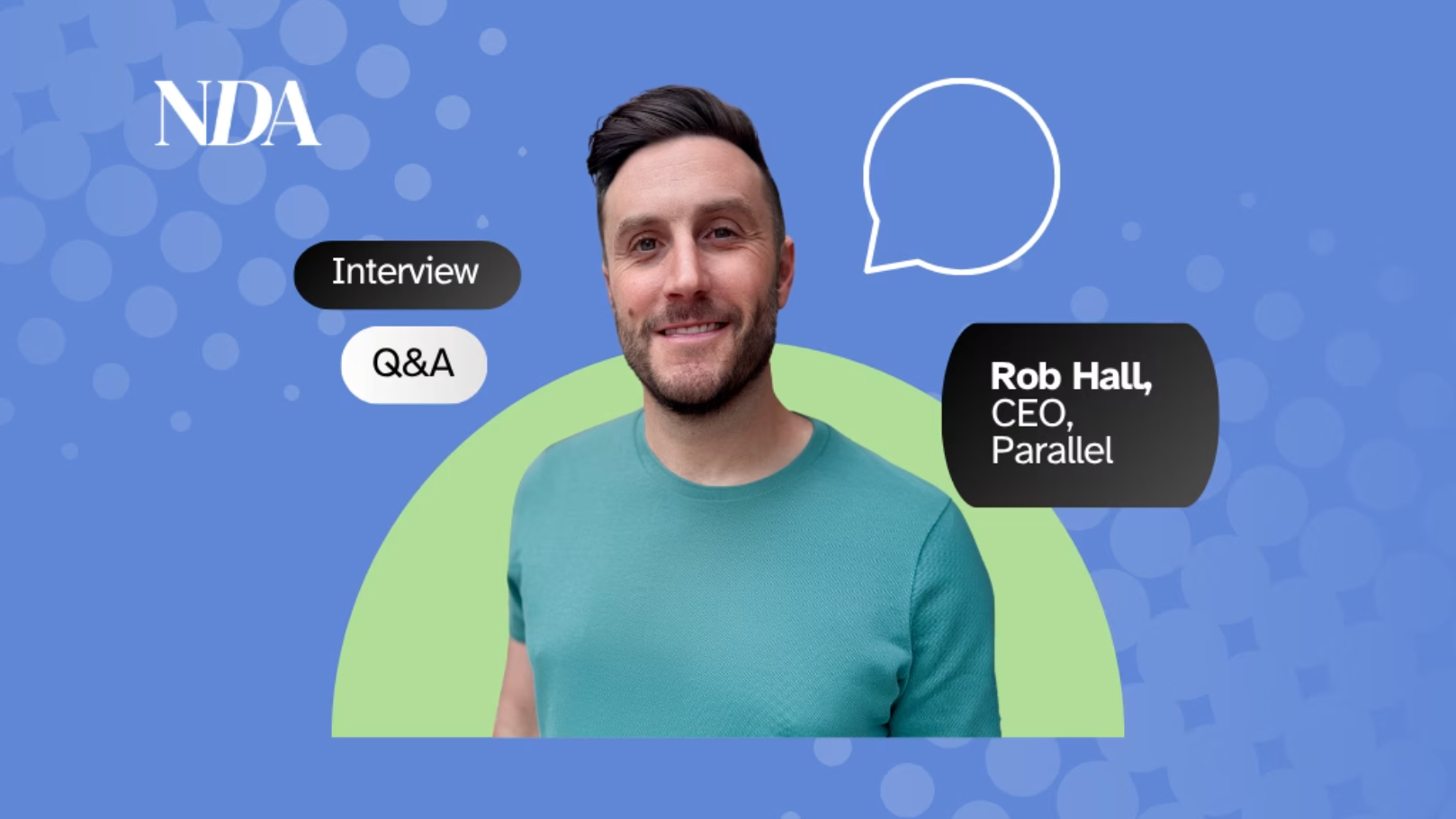
Rob Hall, co-founder of Playground xyz, the ad platform acquired by GumGum in 2021, recently returned to the world of adtech with the launch of Parallel, a platform introducing ‘Customer Suitability’ as a new approach to media buying.
Launched in Sydney and London, Parallel allows brands to quantify and optimise resonance – the fit between a customer, an ad and the content they’re viewing – across live advertising campaigns.
While brand safety and brand suitability help advertisers avoid harmful environments and align campaigns with brand values, Customer Suitability asks whether a video placement is right for the customer viewing it. Parallel combines proprietary AI, large-scale data sets and digital twins – synthetic replicas of consumers – to bring the customer’s perspective directly into the bidstream. The tech is currently focused on video environments and platforms.
New Digital Age spoke with Hall, CEO of Parallel, to find out more…
What motivated you to create/launch Parallel? What gap in the marketplace are you hoping to fill?
I had some time off after I wrapped up the sale of Playground xyz to GumGum. After doing all the usual cliched stuff you do when you’re in between things I started thinking more about where technology was heading. The crazy advances happening with LLMs/GenAI fascinate me and I got to thinking about where it could all end up.
One thing that crossed my mind was that these models will one day be able to understand me and my preferences, attitudes etc. to the extent where it could actually act as a “Digital Twin” of me… after close to 20 years in advertising I couldn’t help but think of the applications for our industry: what if it could be used to deliver better ad experiences, help brands connect more deeply with consumers, cut wastage and so on?
Digital Twins aren’t as science fiction as they sound. The aviation industry uses them to simulate jet engines; carmakers crash-test them; the medical industry are building Digital Twins of hearts. However, they are really quite nascent in advertising. And all the use cases so far are in research, planning and creative testing: basically all pre-campaign.
Yes, there are a fair amount of decisions to make here, but the thing is that you can get all of that right and then when you go to deliver your digital/biddable campaign you’re presented with lots more decisions. And it’s not tens of decisions but tens of millions of decisions…each and every second. Nobody was focused on this, so the opportunity was clear: can we use Digital Twins to power better decisions in activation.
Why do you describe Customer Suitability as the missing piece of the media buying puzzle?
Every impression that gets bought already gets checked for Brand Safety (“is this content safe for my brand?”) and a lot are now checked for Brand Suitability (“is this content aligned with my brand’s values?”). The industry has built out these two checks and both are critical and valuable but we felt there was a layer missing. We call it Customer Suitability (“is this right for my customer?”). It’s the missing piece, and the one we launched Parallel to solve.
We use human-calibrated Digital Twins to deliver on this vision of Customer Suitability. We understand the suitability through a measure we call resonance: the fit between a customer, an ad and a piece of content. And we have built a technology stack to let us do this at the scale and speed needed in biddable media: simulate and score the resonance of every creative x content combination and push the ones that land into the media buy. The way I describe it is a virtual focus group that happens before every impression you buy.
Who is the Parallel platform aimed at, i.e. who will buy it or greenlight its use and who will actually use it?
Anyone who is planning or buying video and grappling with questions around ‘are my ads landing?’ Anyone who feels like there’s this huge fidelity loss from planning (where the customer’s voice is very present) to activation (where it’s currently not) and generally anyone who wants to have a more customer-centric approach to how they operate in media. In practice today that means advertisers and agencies. Quite soon I can also see the supply side picking this up too – publishers and broadcasters proving their content is the right fit for a brand’s campaign (according to the Digital Twins).
What has been the market reaction so far?
Really great. We only officially launched a little more than two months ago but a lot of great work went into building the product before that so we’ve hit the ground running. I think there’s this great convergence of things happening that are acting as a tailwind for us: the growing acceptance of how quick tech is moving and what is becoming possible; the fact that the research establishment has already normalised synthetic audiences; and the pressure on every media dollar to prove it’s working harder than it did last year. So when we speak to brands and agencies, we’re getting this really warm reception and there’s a big pipeline building. Couldn’t ask for more really.
Are there any other trends bubbling up in the media buying marketplace that are worth paying attention to?
Ha! How many people say AI at this point? I’m going to say it too. The more interesting question is which kind. A lot of what AI has done for media so far is the old jobs, faster: trafficking, reporting, the grunt work nobody misses. It’s valuable of course, but for me it gets genuinely interesting when AI starts doing jobs that couldn’t exist before, and simulation is my favourite example, for reasons you can probably guess.
Five years ago you could pre-test one ad in one setting, at panel cost and panel speed. But now we’re doing stuff like simulating every creative against every piece of content on a plan, both before the buy and in real time during delivery. That shift, from doing old jobs faster to doing new jobs entirely, ones that are only possible with AI, is the one I’d watch. We like to say the industry is moving from the observed era (when we measured and recorded what happened), through the prediction era (when we learned the patterns well enough to forecast what was likely) and are now entering into the ‘simulation’ era (where we represent the system well enough to run it forward and ask: what if?). It’s really exciting and there are massive opportunities for the industry at large.
Originally posted on
New Digital Age
More from our team & client partners