
Creator marketing: The growth engine brands can no longer afford to ignore
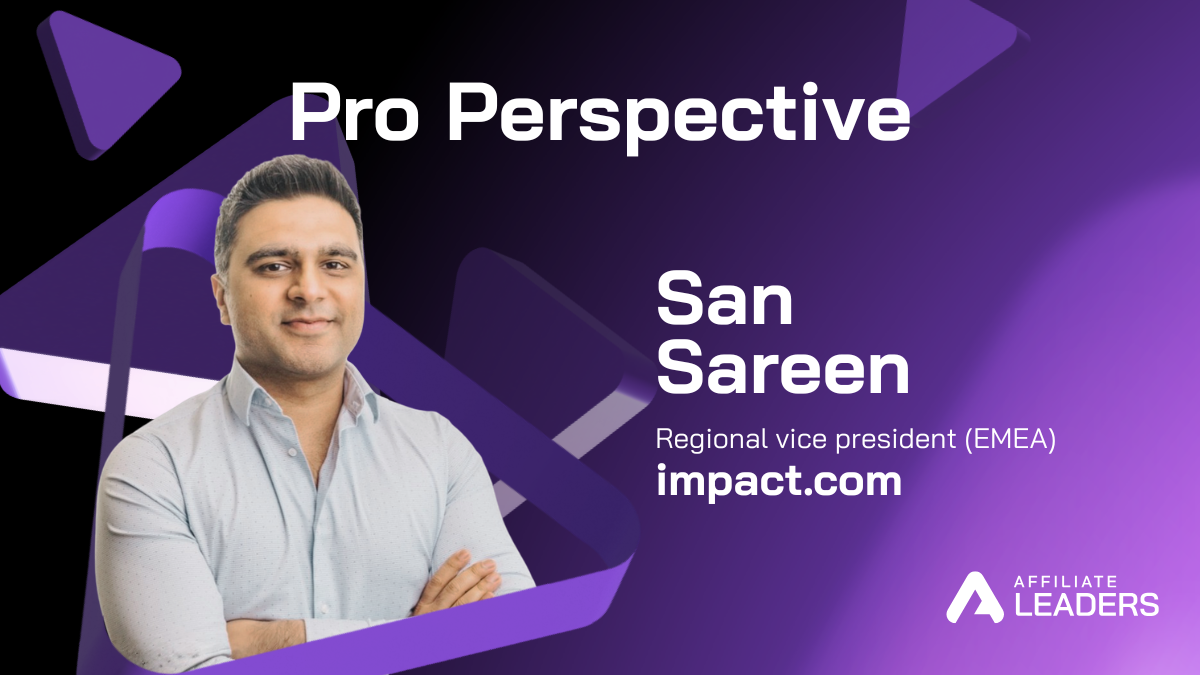
Creators are no longer a bonus extra, they are an extension of the brand that helps build trust and a community, explains San Sareen, from impact.com.
There was a time when creator partnerships were considered a ‘nice-to-have’ in supporting a marketing campaign. They were great for achieving an extra few likes and comments across social platforms, but rarely were creators considered central to an ad campaign, never mind a long-term growth engine.
But times have changed. The creator economy has become one of the most powerful, influential and high-performing categories in digital marketing. The global creator economy was estimated at $252bn in 2025 and is projected to exceed $1.3trn by 2033, according to Grand View Research.
In a world of fragmented audiences, rising acquisition costs and declining trust in traditional media, creators offer a proven path to building trust, authenticity and connection between brands and consumers. Brands have recognised as much: creator advertising spend in the US alone reached $37bn in 2025, growing four times faster than the wider media industry, IAB data showed.
Moreover, as technology has developed, attribution has made creator marketing highly measurable across the entire funnel. This is especially the case as AI transforms both discovery and – more generally – consumer behaviour.
Marketers need to evaluate how they plan for success in a landscape where search is becoming conversational. AI models and LLMs actively ingest creator content alongside brand assets to shape their answer optimisations. This structural shift highlights why legacy last-click attribution is no longer relevant and how partnerships increase in value.
Put simply, creators are no longer simply amplification channels, but increasingly central to how consumers discover, evaluate and connect with brands throughout the customer journey.
Community and relationships – the future of brand growth
As creator marketing matures, the challenge for brands is scaling partnerships without losing authenticity, and community building sits at the centre of that equation. That’s why creators are uniquely positioned to help, because they already operate inside trusted communities built around shared interests and identities.
Creators build deep trust with their audiences, and partnership marketing allows brands to access this ecosystem of trust through mutually beneficial, long-term partnerships. Meaningful communities are built over time, and require consistency, collaboration, and long-term investment.
Operational complexity is also becoming impossible to ignore. Managing creator programmes at scale involves contracts, payments, compliance, reporting, and cross-platform measurement. The brands pulling ahead are integrating creator partnerships into broader acquisition and retention strategies.
Long-term creator ecosystems
Historically, many brands relied on isolated sponsored posts tied to key marketing moments. Campaign-based activity still has significant value, and is effective in driving immediate top-funnel brand awareness.
But even the funnel isn’t traditionally one-directional any more; in fact, the funnel is collapsing, and brands that build a creator ecosystem – and own the data that shows how creators are adding value to their bottom line – are the ones that are winning out there.
An increasing number of marketers are also recognising that sustained creator relationships can be combined with tactical, one-off campaigns to generate stronger results over time.
impact.com customer Skyscanner demonstrates partnership marketing’s potential when the commitment is long-term. Since 2024, the number of active creators in the travel platform’s programme has increased by 64%, creator-driven traffic has risen by 200%, conversion rates have improved by 33%, and revenue generated per creator has increased by 155%.
Consumer mindset is changing, and today 89% of people trust personal recommendations over ads, while 70% of gen Z and millennials won’t trust a brand without doing their own research. This evolution is pushing creators into a far more strategic role; no longer simply amplifying, they are becoming extensions of brand storytelling and community-building efforts.
In this way, creators are not simply driving awareness, but shaping consumer consideration about a brand they’re promoting through deep, authentic integrations.
The most effective partnerships are also the most collaborative. Brands are learning that creators understand their audiences better than any corporate brief. Content tends to perform much better when creators are trusted by brands, and given enough autonomy to communicate in their own tone and style, rather than following rigid messaging frameworks.
impact.com’s recent work with B&Q – and the brand’s creator collaboration with Jonny Hincks – shows the benefits of a deep-rooted, long-term relationship. Over a number of years, the partnership has delivered significant results, transforming B&Q’s digital footprint through credible, transparent growth thanks to long-term creator investment.
Since 2025, Jonny’s following has increased from 511k to 1.9 million (271% growth), and this has expanded the partnership’s potential organic reach by approximately 1.4 million followers, creating a sustainable, high-ROI marketing asset that defines the future of creator-brand partnerships.
But this approach requires a significant mindset shift for marketers. Authenticity remains the defining currency of creator influence, and over-controlling content can weaken the very trust brands are trying to build.
The attribution solution
What’s concerning is that much of the industry still measures creator marketing through awareness metrics such as impressions, views, and engagement rates. While those indicators remain useful, they often overlook where creators are delivering the greatest value: the middle of the funnel, including consideration.
A consumer may first discover a brand through social content, but longer-form creator content – whether that’s podcasts, tutorials, reviews, or comparison videos – is often what moves them from passive awareness into active evaluation.
This is particularly important in crowded categories where consumers have endless choice and low brand loyalty. Creators provide context, validation, and trust in ways traditional advertising often struggles to replicate. And of course the challenge for marketers is that this influence is not always easy to measure.
A customer might encounter a creator recommendation weeks before converting through another channel entirely. Last-click attribution may capture the final action, but it rarely explains what created the demand in the first place.
Modern attribution models are allowing brands to connect creator activity to customer acquisition, retention and lifetime value, moving measurement beyond impressions and engagement alone. This is going to be important as LLMs become an increasingly influential discovery tool. AI models feed on creator content – as well as brand assets – when shaping their answers, so the partnership channel will be able to provide enhanced attribution as the technology evolves.
The brands pulling ahead are building unified views of performance by combining creator activity, platform insights, and first-party customer data. As privacy changes continue to reshape digital advertising, understanding how creator engagement contributes to customer acquisition, retention, and lifetime value is becoming increasingly valuable.
Creator-led future
We’re looking at a creator-led future in which consumers increasingly resist being sold to. Instead, they want to discover, research, investigate and come to their own conclusions about where they want to spend money, and which brands they align with.
Brands that embrace this seismic shift by supplementing their paid media campaigns with creator partnerships will reap the biggest rewards. That’s because it’s about being the trusted voice in the room, not the loudest.
Creator marketing is no longer an experimental channel or a supporting tactic. As consumers increasingly rely on trusted voices to discover and evaluate brands, creators are becoming a core part of how growth is generated, measured and sustained.
San Sareen is regional vice president (EMEA) at impact.com
Originally posted on
affiliateleaders.com
More from our team & client partners