Improving sustainability with AI-driven programmatic advertising technology


Ensuring sustainability for the open web programmatic advertising supply chain is hugely important, and we all need to play our part in making this change.


Previous data from the GoodLoop carbon calculator found that the typical online ad campaign generated 5.4 tons of CO2, with each digital ad impression producing up to 1.09 grams of CO2. Latest research from Scope3 has also evaluated the impact of problematic ad placements on programmatic efficiency and sustainability. They estimate that 184,400mt of CO2 emissions are wasted on these placements every year in the US programmatic display market alone.


There is a direct link between the ad waste and inefficiency that is prevalent in many areas of programmatic advertising, and the carbon emissions this generates. Related to these findings, the ANA Programmatic Transparency Study identified up to $31bn in global open web advertising that is wastage due to placements being non-measurable, non-viewable, MFA (Made For Advertising) or IVT (Invalid Traffic).


The good news is that the latest programmatic advertising technology directly solves for this, as a result of its efficiency in reducing this waste and then optimizing better performing impressions for the buy-side.


At Onetag we see the benefits our supply-side AI-powered programmatic curation technology delivers for the open internet, curation partners and the planet on a daily basis. In contrast to traditional carbon scoring methods, which might simply look at sites based on their location and by browser etc - our placement-level approach removes 53% of the total impressions we initially see, and then learns from all placements and impressions to provide high media quality and performance, all without the use of cookies.


We call this process Smart Curation, as it harnesses intelligent technology to curate ad placements in real time to feed DSPs with the impressions that matter.


In addition to these efficiency benefits that smart curation of the bidstream brings, supply-side curation also enables better matching on inventory versus carrying this out on the buy-side. Data curators can apply their first-party data knowing it will achieve greater scale when activated in DSPs. All parties also benefit from the streamlined path from supply-side curated deals to DSPs, without the need for throttling or QPS (Queries per Second) overload as the demand-side no longer has to work so hard to find the placements and impressions that count.


At Onetag we see how this approach is highly sustainable while driving great performance for private deals and in the open exchange. On a monthly basis our global Onetag private cloud CO2 emissions equate to the energy use of only 2.5 homes for a year.


Looking forward, we’re excited about the possibilities for a better programmatic advertising experience for the open internet and our planet: using Smart Curation to identify and optimise high media quality placements that perform while significantly reducing carbon emissions.


More from our team & client partners

The Credibility Premium: Why AI has just made riding solo impossibly expensive
August 14, 2026
For the last twenty years or so, brands have been rightly obsessed with their search rankings. But in the time it takes for consumers to completely reinvent their online research habits – which it turns out wasn’t very long at all – it has become clear SEO was the easy part.
Creator marketing: The growth engine brands can no longer afford to ignore
August 13, 2026
There was a time when creator partnerships were considered a ‘nice-to-have’ in supporting a marketing campaign. They were great for achieving an extra few likes and comments across social platforms, but rarely were creators considered central to an ad campaign, never mind a long-term growth engine.
Rob Hall, CEO of Parallel: “Digital Twins and ‘Customer Suitability’ can power better decisions
August 12, 2026
While brand safety and brand suitability help advertisers avoid harmful environments and align campaigns with brand values, Customer Suitability asks whether a video placement is right for the customer viewing it. Parallel combines proprietary AI, large-scale data sets and digital twins – synthetic replicas of consumer
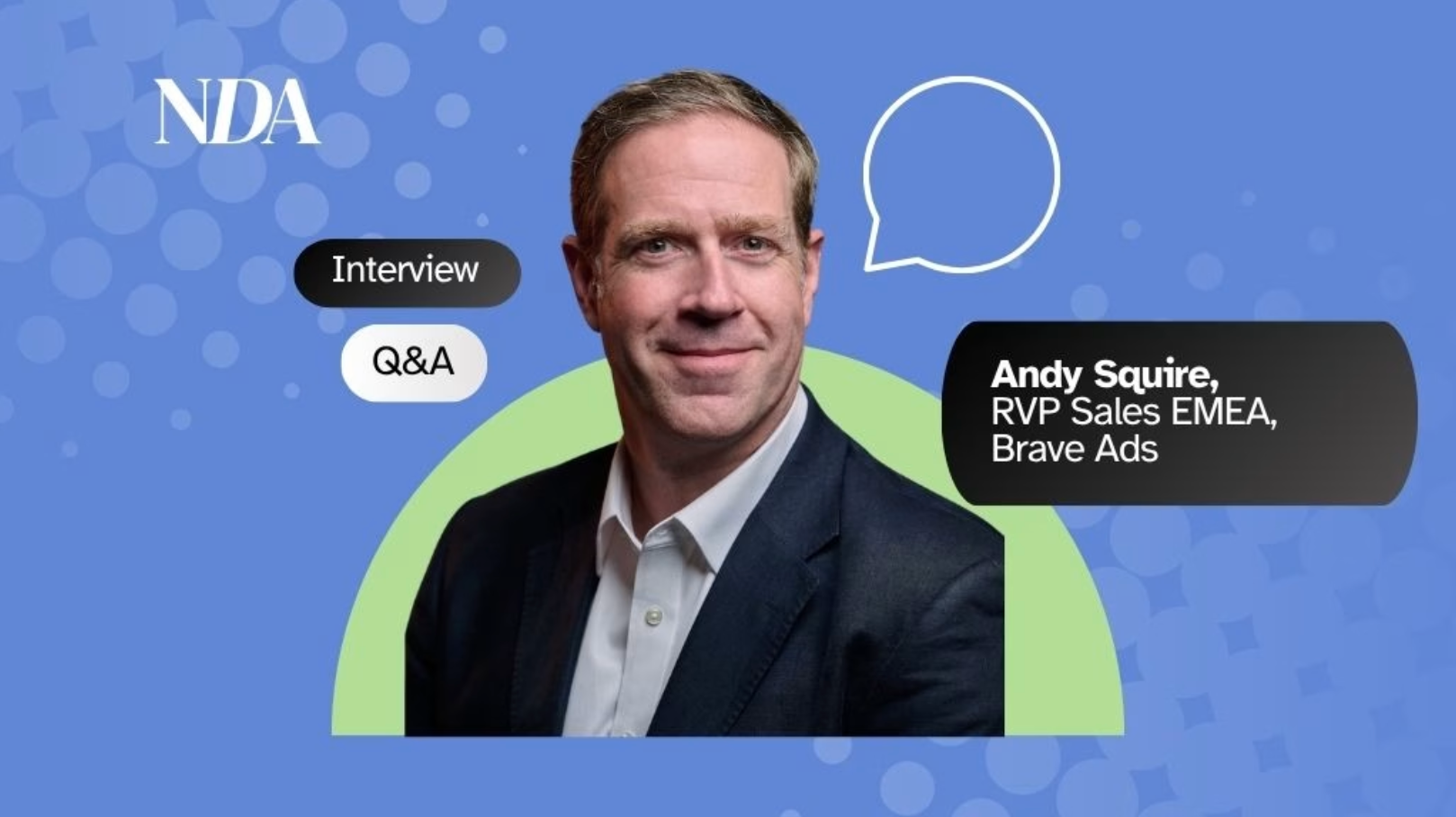
Andy Squire, Brave Ads: “AI replacing traditional Search? It’s not as simple as that”
August 10, 2026
NDA spoke recently with Andy Squire, RVP Sales EMEA at Brave Ads, about the rapid evolution of the Search marketplace and how marketers can reassess their strategy for discoverability…
Brandtech’s Jellyfish Launches AI Ads Optimisation in Share of Model™
By Ren Bowman August 6, 2026
Jellyfish, a global digital marketing leader within The Brandtech Group, today announced AI Ads Optimisation, a major expansion of the paid media optimisation capabilities within its proprietary Share of Model™ Platform. The update extends beyond the existing Google Ads integration for Performance Max to generate media
Tinder ‘Dump Traditional Dating’: Alternative fourplay | The Digital Voice™
By Ren Bowman August 6, 2026
Oh the joys of online dating…are there any? Not according to many of those we know but maybe, just maybe Tinder has the answer, with its Double Date feature.
How adtech CEOs should use LinkedIn in 2026: a visibility playbook for the AI world
July 25, 2026
Everyone knows that CEOs should be using LinkedIn. But so often it’s something they promise they’ll get around to after the board meeting, after the investor update, product launch, client pitch, or one of a hundred other urgent tasks competing for attention. It's time to stop treating LinkedIn as a nice to have.
Stop the scroll: how to win at SEO in the age of AI search | The Digital Voice™
May 14, 2026
How people seek and find information, optimising for the front page of search engines is no longer optimal. GEO has made technical SEO more important than ever.
Journalism and Gen-Z: What is the future of the profession, and will AI be friend or foe?
May 14, 2026
As of 2026, approximately 45% of workers have AI anxiety: they fear that in the near future AI will make their job obsolete. From the perspective of a Gen-Z student beginning to consider what her career might look like, Tabitha Bonner looks at the adapting role of journalists.
Show More