
Jellyfish Maximises Google Ads PMax Performance Using Insights from LLMs
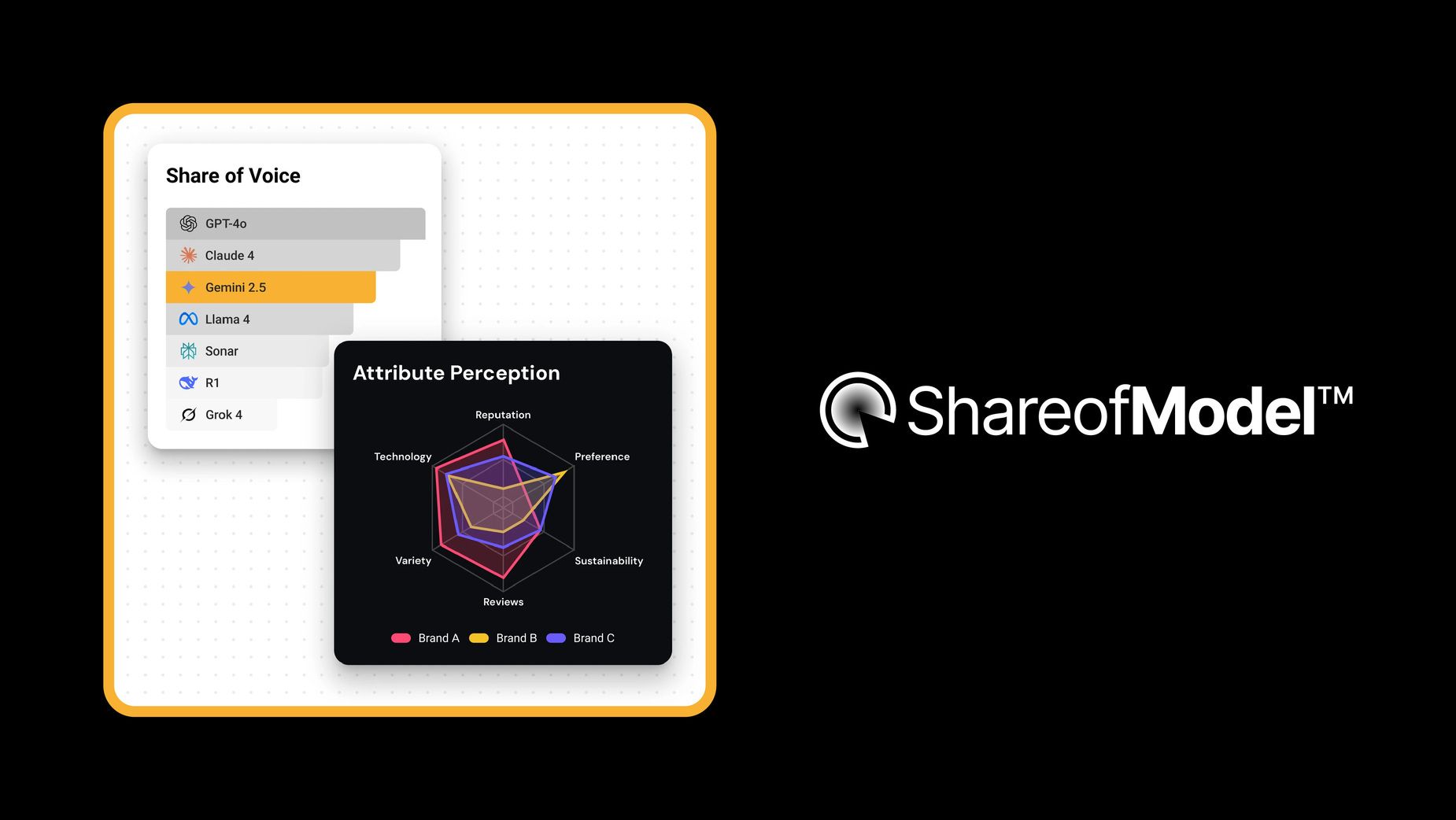
With its Share of Model™ tool, Jellyfish becomes the first company to leverage brand perception from AIs like Gemini and ChatGPT to automatically generate ad optimisations.
Jellyfish has made a major breakthrough for advertisers on Google Ads. Its proprietary tool, Share of Model™, launched in late 2024, can now turn AI-driven brand perception analysis into direct optimisations for Performance Max (PMax) campaigns.
In practice, the technology identifies gaps between how AIs perceive a brand and the brand’s advertising messages. It then automatically generates Search Themes aligned with users’ real intentions, enhancing both the relevance and efficiency of campaigns at scale.
A unique synergy for smarter PMax campaigns
This seamless and automated integration transforms PMax campaign management by building a direct bridge between brand perception and advertising performance through four key steps:
- Perception Analysis: Share of Model™ reveals how AIs truly perceive a brand, its products, and its competitive environment.
- Opportunity Identification: The algorithm compares this perception to existing PMax campaigns to uncover “semantic gaps” — relevant themes where the brand is currently absent.
- Search Theme Generation: It automatically produces new Search Themes based on real consumer intent, validated by search volumes, to fill those gaps.
- Instant, Automated Optimisation: With one click, new themes are injected into Google Ads via API, enriching and optimising campaigns without manual intervention.
From insight to business impact: PMax automation powered by Share of Model™
Developed with direct support from Google, this innovation positions Jellyfish as a pioneer, enabling advertisers to fine-tune their campaigns quickly and precisely using insights directly aligned with consumer needs. The result: greater ad relevance and improved performance across Google Ads campaigns.
Proven results
Early deployments confirm the tangible impact of this approach.
At MSC Direct, a leading industrial distributor, Share of Model™ identified previously invisible search opportunities for ad algorithms-driving a +45% revenue increase on optimised asset groups and an average +50% boost in ROAS over a 30-day test period, all without increasing budget.
Other brands, particularly in the lifestyle sector, have reported similar results, with measurable improvements in both relevance and qualified traffic within just a few weeks.
“Jellyfish is the first to connect LLM-driven understanding with large-scale ad activation. With Share of Model™, we turn AI-based brand perception analysis into automatic Search Theme generation, directly injected into Google Ads PMax—boosting both relevance and performance,” explained Thomas Skowronski, VP, technology solutions at Jellyfish.
“This integration shows how LLMs can be leveraged to analyse gaps between brand perception and user intent. PMax campaigns powered by these insights become more precise, measurable, and aligned with real search behaviour—while maintaining transparency and control for advertisers,” added François Bracq, head of innovation partners at Google France.
Also Published in: Little Black Book
More from our team & client partners