Lumen Registers Increased Views and More Positive Response to Ads using SeenThis Technology


Adaptive streaming company, SeenThis, announces today that a study with Lumen, the leading technology company for attention measurement, found that creatives delivered by SeenThis capture higher attention and more positive responses than delivering the same creatives using conventional technology ​​. The study was commissioned to determine how much attention is generated by SeenThis-enabled streaming video compared to standard video advertising and to understand the impact of SeenThis proprietary streaming technology on the all important metric of attention.


For the test, Lumen compared three streaming creatives from SeenThis with equal size and placementstandard video ads on a popular news website. Lumen then performed a variety of tests, including eye tracking and recall. 


SeenThis is a vast improvement on standard streaming for the delivery of video in an advertising context,, with its proprietary technology optimizing for display and minimizing data transfer. Lumen’s study shows the performance value of this faster and more impactful viewer experience. It found that SeenThis streaming ads generated significant performance improvements. For instance:

  • 80% of ads using SeenThis technology grabbed attention compared to less than half when using conventional technology
  • 78% of ads powered by SeenThis technology were ‘technically viewable’ compared to only two thirds when using conventional technology
  • Prompted brand recall was up by 4% compared to standard banners
“Lumen’s findings prove the clear benefit of delivering digital ads with SeenThis technology. Advertisers gain dramatic increases in attention compared to standard video ad delivery technologies,” said Jesper Benon, CEO at SeenThis.
“Streaming video technology from SeenThis delivers higher actual attention, giving advertisers a clear opportunity to reach a higher number of their audience effectively,” said Mike Follett, CEO and Founder at Lumen.

Methodology: 

The test group respondents browsed three webpage articles where each article either included an outstream video ad using SeenThis technology or standard video ads. To conduct the study Lumen enrolled 300 respondents from the UK all aged 18+ to conduct a 10-minute online survey. Additionally, they also enrolled 250 participants as a control group to answer a 5-minute survey. The test groups then answered spontaneously and prompted recall questions. In order to measure attention effects, the study participants accessed Lumen’s software via their mobile phone turning their device into an eye tracking camera. 


Also published in: Marcommnews

More from our team & client partners

The Credibility Premium: Why AI has just made riding solo impossibly expensive
August 14, 2026
For the last twenty years or so, brands have been rightly obsessed with their search rankings. But in the time it takes for consumers to completely reinvent their online research habits – which it turns out wasn’t very long at all – it has become clear SEO was the easy part.
Creator marketing: The growth engine brands can no longer afford to ignore
August 13, 2026
There was a time when creator partnerships were considered a ‘nice-to-have’ in supporting a marketing campaign. They were great for achieving an extra few likes and comments across social platforms, but rarely were creators considered central to an ad campaign, never mind a long-term growth engine.
Rob Hall, CEO of Parallel: “Digital Twins and ‘Customer Suitability’ can power better decisions
August 12, 2026
While brand safety and brand suitability help advertisers avoid harmful environments and align campaigns with brand values, Customer Suitability asks whether a video placement is right for the customer viewing it. Parallel combines proprietary AI, large-scale data sets and digital twins – synthetic replicas of consumer
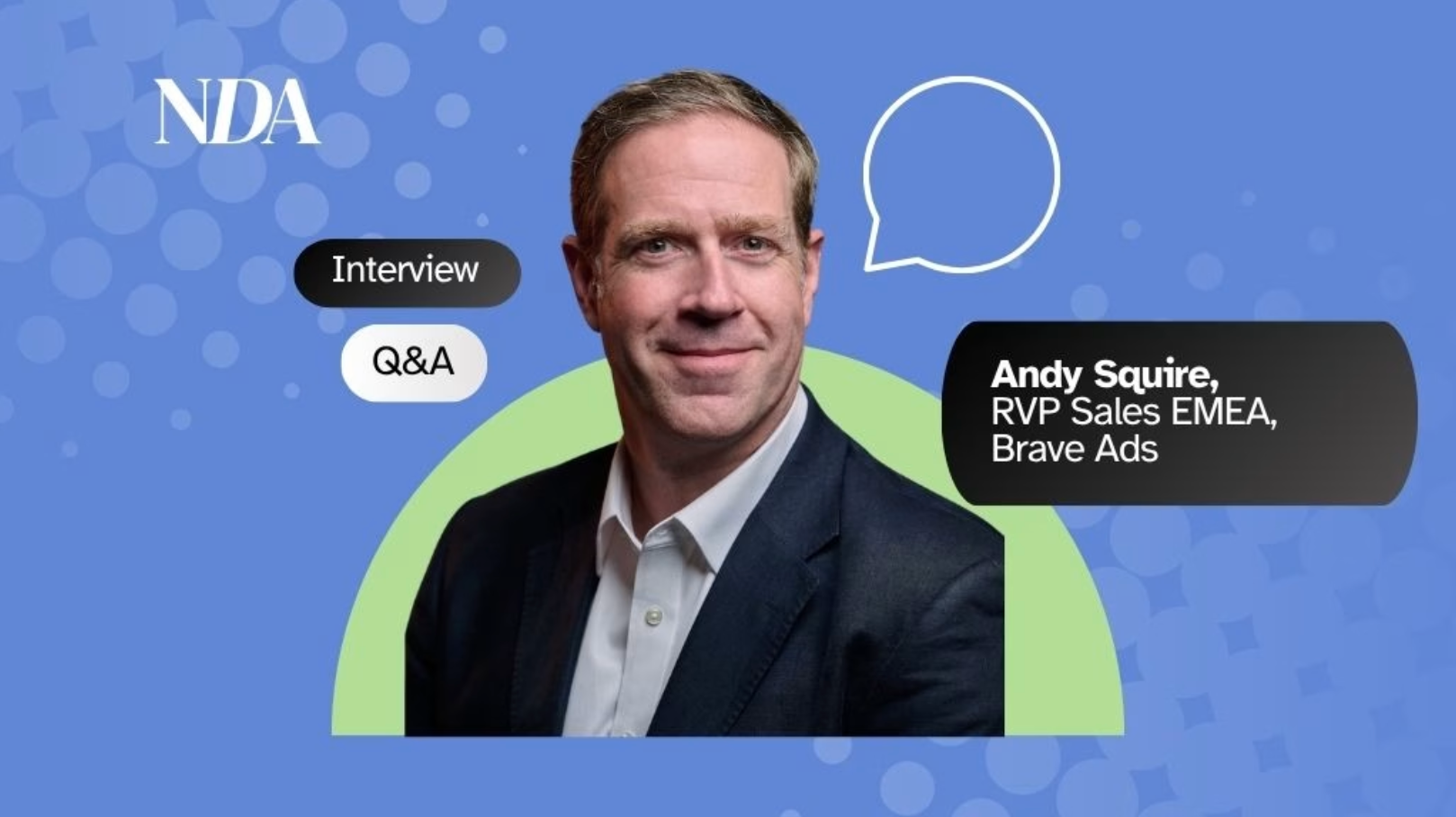
Andy Squire, Brave Ads: “AI replacing traditional Search? It’s not as simple as that”
August 10, 2026
NDA spoke recently with Andy Squire, RVP Sales EMEA at Brave Ads, about the rapid evolution of the Search marketplace and how marketers can reassess their strategy for discoverability…
Brandtech’s Jellyfish Launches AI Ads Optimisation in Share of Model™
By Ren Bowman August 6, 2026
Jellyfish, a global digital marketing leader within The Brandtech Group, today announced AI Ads Optimisation, a major expansion of the paid media optimisation capabilities within its proprietary Share of Model™ Platform. The update extends beyond the existing Google Ads integration for Performance Max to generate media
Tinder ‘Dump Traditional Dating’: Alternative fourplay | The Digital Voice™
By Ren Bowman August 6, 2026
Oh the joys of online dating…are there any? Not according to many of those we know but maybe, just maybe Tinder has the answer, with its Double Date feature.
How adtech CEOs should use LinkedIn in 2026: a visibility playbook for the AI world
July 25, 2026
Everyone knows that CEOs should be using LinkedIn. But so often it’s something they promise they’ll get around to after the board meeting, after the investor update, product launch, client pitch, or one of a hundred other urgent tasks competing for attention. It's time to stop treating LinkedIn as a nice to have.
Stop the scroll: how to win at SEO in the age of AI search | The Digital Voice™
May 14, 2026
How people seek and find information, optimising for the front page of search engines is no longer optimal. GEO has made technical SEO more important than ever.
Journalism and Gen-Z: What is the future of the profession, and will AI be friend or foe?
May 14, 2026
As of 2026, approximately 45% of workers have AI anxiety: they fear that in the near future AI will make their job obsolete. From the perspective of a Gen-Z student beginning to consider what her career might look like, Tabitha Bonner looks at the adapting role of journalists.
Show More