
Seizing the Native Advertising opportunity
Larraine Criss, COO at Preciso, offers a guide to native advertising and explains why so many advertisers find it so much more effective than standard banner ads
The modern consumer is bombarded with advertising messages, and has become blind and deaf to the vast majority of them. One often-quoted stat claims that a person is more likely - and not just “more” likely but 475 times more likely - to survive a plane crash than they are to click on a banner ad. Admittedly, the stat, from Solve Media, is from 2011, but the point is nonetheless well made.
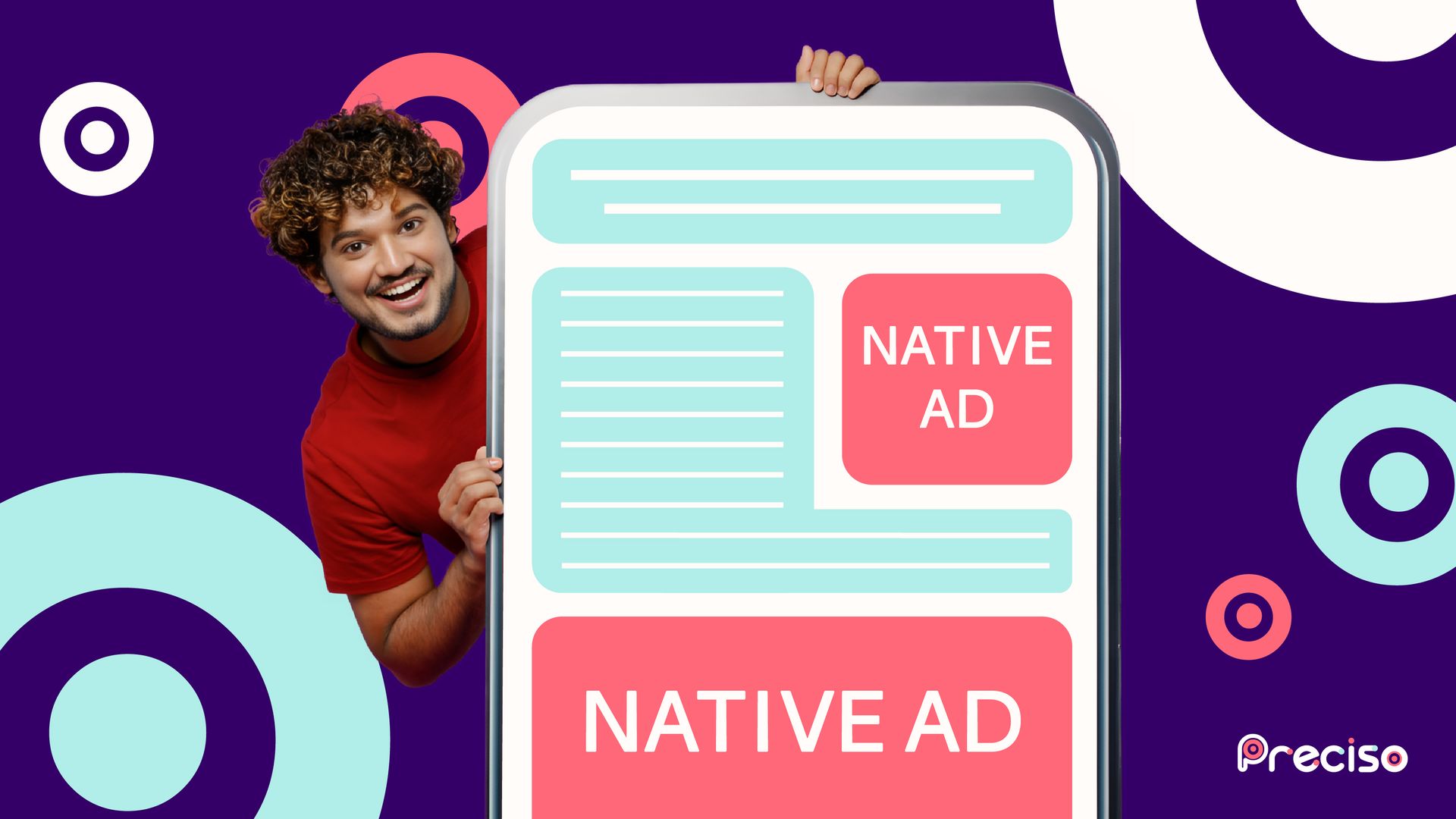
So it stands to reason that an ad stands more chance of achieving cut-through and having an impact if it doesn’t look so much like…an ad. This is the beauty and the power of native advertising. Native ads are designed to blend in naturally with the content around them. They look less like ads, more like the content you came to the website or opened the app to see, allowing the user to immerse themselves in content directly relevant to what they are consuming on the page, rather than generic content based on previous clicks.
Types of Native Advertising
A native ad can take many forms. The key is that it should blend seamlessly into the content around it, to the point where the main clue is a small label to say it is ‘sponsored’ or ‘promoted’. Such transparency is essential, but does not dilute native ads’ effectiveness.
Native ads can appear as in-feed ads on social networks or news sites and apps; as paid ads in search engine results; as recommendations of content to look at when the user reaches the end of an article; as a promoted listing on sites such as Amazon; and even within mobile games, as part of the game itself. This could take the form of, say, a billboard promoting a product by the side of the road in a racing game. In terms of format, they can incorporate text, static images and video.
Effective Advertising
All have one thing in common, however: because of how well they align to the content around them, they tend to be much more effective than traditional banner advertising. A study by Sharethrough and IPG Media Lab surveyed 4,770 consumers and used eye-tracking technology to assess the attention of 200, to better understand users’ visual attention and attitudes towards native ads versus standard banner ads. Native ads clearly outperformed banners in the study.
It found that consumers looked at native ads 53% more frequently than display ads. 25% more consumers were seen looking at in-feed native ad placements (the most common editorial native ad format), compared to display ad units. Native ads registered an 18% higher lift in purchase intent and 9% higher lift for brand affinity responses than banner ads. And 32% of respondents said the native ad “is an ad I would share with a friend or family member”, compared to just 19% for display ads.
At Preciso, we have seen similarly encouraging results since we introduced our Ultima native advertising solution earlier this year. Performance tests conducted for a fashion client showed an average clickthrough rate of 2.1%, compared to the industry average of 1.84%.
Engagement rate was also higher at 65.94% (60.03%), as was the average session duration at 3m 46s (2m 40s), and bounce rate at 32.54% (35.76%). Native ads also performed higher than display across verticals such as Pet/Animal, with a CTR of 1.96% compared to the industry average for that sector of 0.46%.
With results like these, it’s perhaps not surprising that the native advertising market is booming. A report from Adyoulike forecast that the value of the global native advertising market would rise by 372% between 2020 and 2025, from $85.83bn to $402bn.
If you don’t know where to start with native advertising, take a closer look at the content you consume every day on the web and in the apps you use, and you will see that native ads are everywhere, with good reason. Put native advertising to work for your brand and see for yourself how effective it can be.
Also published in: Martech Edge
More from our team & client partners