
GumGum’s Playground xyz launches Optimal Attention
Attention measurement and optimisation platform, Playground xyz, has unveiled a new framework, to help brands find their Optimal Attention, which offers advertisers a bespoke and in-depth understanding of how Attention Time directly influences outcomes.
Over the past five years, Playground xyz has been at the forefront of addressing the limitations of traditional advertising metrics such as viewability and click-through rates.
These metrics, while indicative of potential visibility, fall short of capturing the extent and quality of user engagement with digital ads. This gap led to the development of Playground xyz’s attention metric, Attention Time: the length of time, in seconds, that an ad was directly looked at.
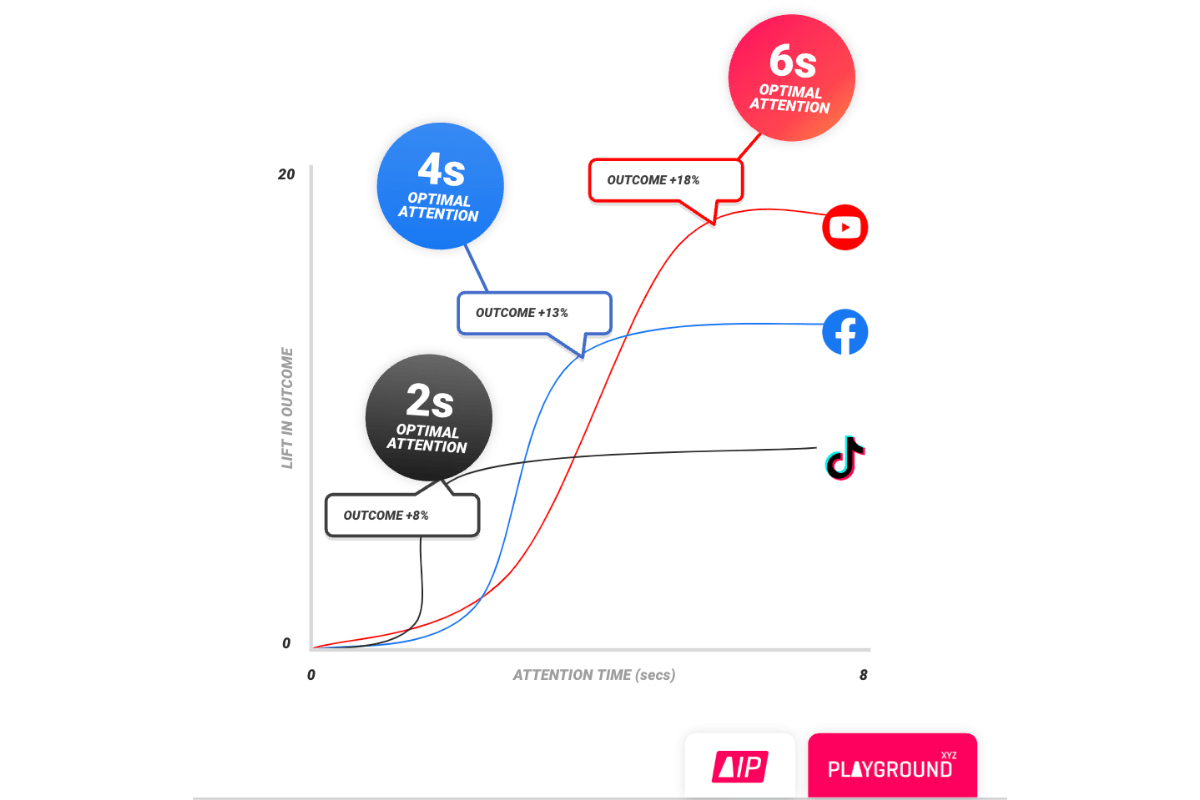
Building on this, the new framework now helps brands find their Optimal Attention, defined as the minimum target Attention Time required to deliver increases in brand outcomes. It represents a nuanced approach, acknowledging that not all seconds of attention hold the same value and that different brands, creative executions, and channels all “convert” attention differently.
Optimal Attention also goes deeper, recognising that attention is shaped campaign by campaign, based on factors like brand market position, the complexity of an ad’s message, and the environment in which the ad is placed. By evaluating how different factors influence attention, Optimal Attention facilitates a more precise understanding of how attention translates into real-world results.
Using the framework, the company has already helped understand Optimal Attention for 35 brands from eight advertiser verticals across Australia, the United Kingdom, and the United States.
Playground xyz CEO, Rob Hall, said: “Attention is a critical, real-time indicator for campaign management and optimisation. By introducing Optimal Attention, we’re providing a more comprehensive way for brands to understand what Attention Time actually means for them. We’re not just measuring attention — we’re setting a new standard for leveraging it in digital advertising across key environments like Display, OLV, YouTube, Meta and more.”
Using the Optimal Attention framework, Playground xyz will leverage a combination of Attention Time metrics and brand lift survey analysis to link seconds of attention to changes in campaign outcomes, producing an Optimal Attention curve for each brand. By identifying the optimal point where attention levels align with desired outcomes, the framework empowers brands to craft more effective media and creative strategies.
The framework offers detailed comparisons across media channels, formats, and creatives, enabling advertisers to apply attention insights practically. It aims to drive innovation and inspire new strategies within the advertising industry, promoting a more informed and effective approach to capturing consumer attention.
In 2021, GumGum acquired Playground xyz, giving advertisers the ability to not only holistically measure attention across their digital buys with decoupled attention measurement from Playground xyz, but also to use attention data to supercharge their contextual campaigns on the GumGum stack.
Also published in: Mobile Marketing Magazine
More from our team & client partners