
Realising a route to responsible marketing
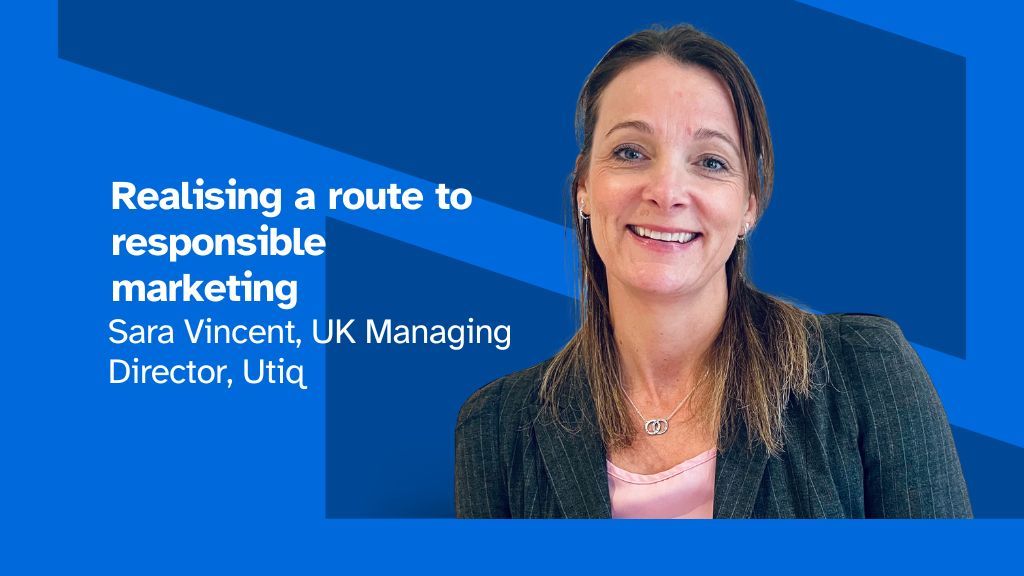
Over the years, the conversations in market have centred around pressing themes including sustainability, privacy, consumer trust and identity solutions in the cookieless era. But what I have noticed recently is that as industry players, we’re starting to bring those different themes together under a single question: “how do we achieve responsible marketing?”
Having been fortunate enough to take part in a number of these discussions, here are my top takeaways on what the industry can do to execute truly responsible marketing.
Make your inventory more addressable
We’ve been talking about a future without cookies for some time now, but we need to think of it more as a cookieless present than a cookieless future, with Safari, Firefox, Edge browsers already having deprecated third party cookies.
Addressability is the bedrock of online advertising. However, nearly half of the open web (30-40%) is currently non-addressable, which in fairness has crept up on us but is certainly not a comfortable position for anyone to be in.
If we can flip our mindset and bring more urgency to solving the challenge we have TODAY, we will be in great shape for TOMORROW.
The fact is that browsers that have deprecated third-party cookies over the past seven years tend to be the go-to for more affluent users, which means brands are under-represented in these environments today and are therefore missing out on some of their potential target audience.
We have an opportunity now to light up this inventory and in the process make us more accountable as an industry – to respect user consent, but also to unlock the potential of the open web, which, with proper processes and tools in place, could be the perfect advertising environment in the long term.
Do more with less (data)
There are many routes to cookieless advertising. Contextual targeting has been around for a while now and we’re starting to see solutions advance further this year. And then there’s the privacy sandbox, which some are currently testing on Chrome. But arguably the strongest trend being discussed is to make the most of first-party IDs.
There are several ID solutions out there, but by choosing to work with the most reputable, scalable providers of persistent IDs, my advice is check credentials and do your due diligence as you would for any partner that you choose to work with. Prioritise partnerships with those that align with your values and are future proofing themselves as we move into a new era of digital advertising.
Focusing on data minimisation and decentralisation will reduce the cost of business, enabling better online experiences for everyone.
Bring parity to the open web
For solution providers, the mission we’re seeing now is to bring parity between what exists in the open web versus walled gardens so that the open web continues to be a viable and valuable environment in which to advertise. ID solutions need to be ubiquitous to reach audiences at scale. If we can make this happen, and help fund the open web, all parties stand to benefit:
- Buyers gain access to persistent IDs that provide 1) addressability at scale to reach users who aren’t logged in, 2) effective frequency capping, and 3) 100% human audience.
- Publishers (who, let’s face it, have had a hard time with addressability until now) can finally be rewarded appropriately for the valuable/quality content they are curating.
- Consumers are given an opportunity to give (and revoke) their consent freely, and so are much more likely to put their trust in the brands and publishers with whom they interact.
Build a cookieless present
What if cookies went away tomorrow? Where would that leave you today? Have you thought about that impact? What is your first move? Are you talking to the solutions that are actually going to deliver, or the buyers who are leaning in right now?
I would advocate for building out your plan of action now – then you have two choices. Put it neatly on the shelf ready to dust off when Chrome deprecates the third-party cookie (if that is when you think the problem will start). Or, start to execute the plan today on the 40% of inventory that is currently unaddressable.
We are already on a path to a more responsible ecosystem; in many ways, it’s a path of common sense. Being more efficient, considerate of targeting and thinking ‘user first’ will always be the better path to take. Now it’s all about continuing that education piece and making the most of the open internet today, and in the years to come.
Also published in: New Digital Age
More from our team & client partners