
“Advertisers went from seducers to stalkers” – how attention metrics are putting them back on the right path
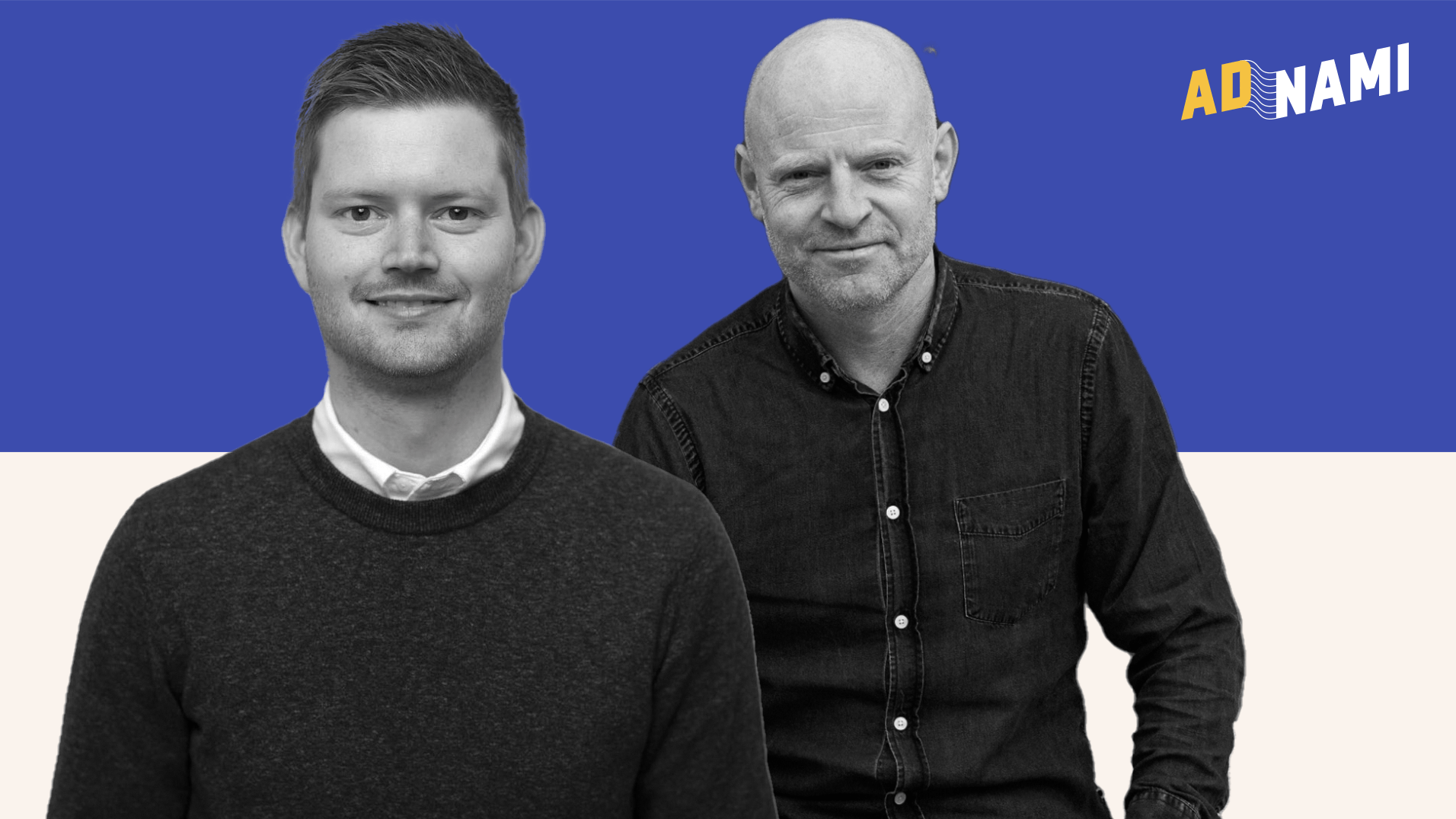
For the past three years, Dentsu has led a global conversation around attention in advertising. The marketing and advertising giant’s latest piece of research focuses on the Danish market, with the cooperation of partners including high impact advertising provider Adnami and eye-tracking specialist Lumen Research. We spoke to Thomas Toftdahl Jensen (left), Dentsu Denmark Executive Director, Strategic Solutions, and Adnami’s Nordic Market Director Peter Østrem (right), about the link between creativity, attention and effectiveness, the ability to attach a CPM to attention – and how advertisers are leaving stalking behind.
Mobile Marketing: What do you consider to be the main findings of the study?
Thomas Toftdahl Jensen: Well, what came out of our original global study is that viewability in advertising – just being able to see something – is not the same as actually seeing it. And we have really gotten a lot of insights into the differences between those two key metrics in the past few years, including here.
But the main thing this new piece of research shows is that the longer you look at an ad, the more effect it will have. That, for me, is the central point, and you can use that information as a metric across all channels – not only digital, but also out-of-home, TV and others.
MM: What are the main implications of that insight?
TTJ: It enables this new metric that we’ve introduced, which is the attentive CPM (aCPM). We believe that this will lead to a shift in the industry, where instead of buying impressions, we’re transitioning to buying seconds of attention.
When we look at aCPM, we see that the most cost-efficient media is video formats and high impact. Those come out really strong here compared to, for example, social media and standard display advertising which had high viewability but low attention.
MM: Do you have examples of specific format insights?
TTJ: In general, we see that video formats and larger formats are better at getting noticed than smaller formats. On desktop topscroll, for instance, we achieve an average of 6.3 attentive seconds with the user, and with mobile midscroll we get 3.2 seconds with the user, which respectively corresponds to 3.9x and 2x more time than on standard display formats. And that is important, because we need about two seconds with the user to create ‘The Golden Window for Recall’, where the probability of higher ad recall increases.
MM: The value of attention seems to be increasingly well recognised, but there has been some pushback regarding reach and frequency, hasn’t there? The idea that the bigger formats perform well, but if you need to have a national reach, it might be difficult…
TTJ: So, this is really an important point. These things that we know about attention now give us the possibility to push budget towards formats that get a proven higher attention. But at the same time, if we don't reach the number of eyeballs or the right eyeballs that we need in order to have an efficient campaign, it doesn't make sense.
So our approach to it, at least in Denmark, is that we need to plan a campaign for reach first, frequency second, and attention third. So we need to still get a high reach to the right people – we can't just take social media or move standard display advertising out of the equation. We still need to figure out, how many people do we need to reach with the campaign? But then how can we do that with the highest possible attention?
MM: What does this mean from a practical planning point of view. How do agencies apply it?
TTJ: A lot of it is doing what we used to, but we are now able to use aCPM instead of a standard CPM. Through Lumen Research, we have the possibility to use a custom-bidding algorithm directly in the auctions, when buying high impact and display formats programmatically. So for example, if it's this device, this screen size, this time of day, we can use that information to estimate how much attention we will actually get on that placement and then we can adjust the bid accordingly.
MM: What is the value of research like this to Adnami as a technology platform providing high impact formats?
Peter Østrem: It’s a landmark. It changes the way media measurement and media quality should be understood. But it is also just a starting point. The important thing is to have a metric that works across brands and channels. Once we can measure it and scale it in a cost-efficient way, then we can say, okay, how do we optimise? It’s about media planning, buying, modifying bidding algorithms, understanding the context you’re buying from. It goes much further than just measurement.
MM: And how are clients responding to this shift towards attention?
PØ: We certainly have clients who have found that attention is the missing piece of insight they have been looking for, and that attention-grabbing formats can leverage that. I think it's also important that basically we're not just comparing a big format with a smaller format, but we now have evidence that high impact is genuinely doing the things that we at Adnami have been preaching for quite a long time. And that is a game-changer.
MM: And, finally, Adnami has always stressed the importance of creative - where does creative sit in all of this for Dentsu?
TTJ: Well, we should stress that the creative is by far the biggest driver of effect from attention. Our research suggests that the more relevant an ad is, the better it works. And I think, for a while, all the digital possibilities kind of made us forget to be creative. Advertisers moved away from being seducers of people’s attention to being stalkers. However, with this, we're really trying to get back to a situation where advertisers have better insights for how to earn people's attention, rather than trying to claim it.
This is not something we as media agencies can succeed with alone. We need to work together across the industry – technology providers, publishers, media agencies, creative agencies and advertisers. And with this research globally and in Denmark, we have started that journey.
Also published in: Mobile Marketing
Podcasts powered by
AudioHarvest
More from our team & client partners