
Digital Women: Jo Eckersley, CEO of Bubbl, encourages women to take on more tech roles
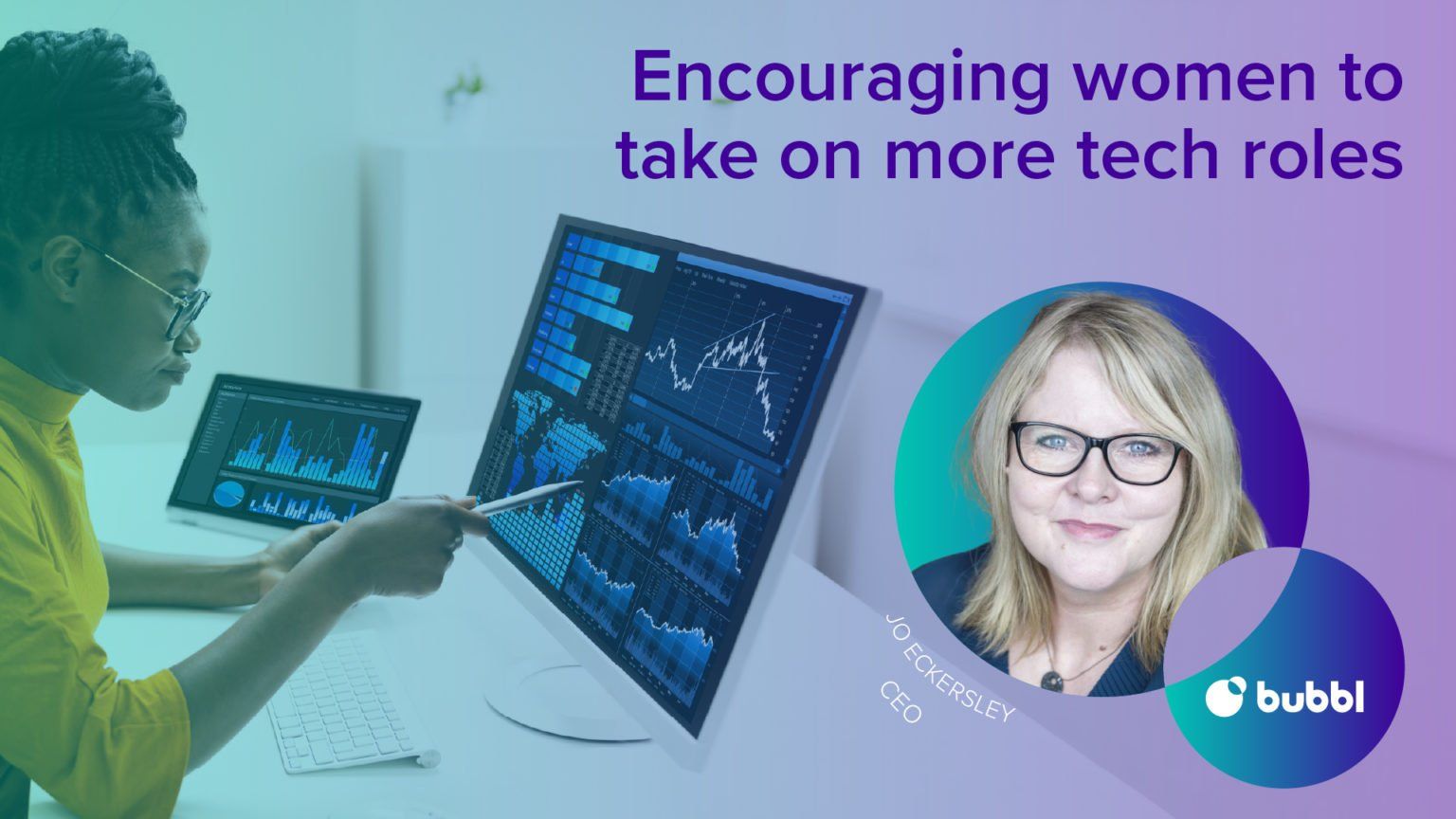
NDA’s Digital Women series is talking to leaders from across our industry to understand the particular challenges, and opportunities faced by women. Next up is Jo Eckersley, CEO of Bubbl.
What are the biggest challenges and opportunities for women in the digital industry today?
Our industry is growing rapidly, as companies across every sector commit to ongoing digitisation. That is great for women, as there are more opportunities available, but we still seem to be hindered by our education. The percentage of female graduates with core STEM degrees is only 26%, so there is a pervasive stereotype that women are not as technically-minded as men. And that means women seem to have to work harder throughout the pitching or recruitment process to prove ‘beyond a reasonable doubt’ that they have the expertise required for any given opportunity.
In reality, women are able to demonstrate not only an aptitude for the more technical aspects of a task, but also the soft skills that improve efficiency and resonance with the target customer. I believe those soft skills present the biggest opportunities for women, as they are exceptionally important when it comes to translating digital products into consumer experiences. And that will be increasingly important as companies continue to invest in technologies like the metaverse – to ensure those efforts are still rooted in human connection and not merely implementing tech for the sake of it.
What does the industry need to do to better champion women?
Digital industries need to do more to make sure women are represented, whether that’s by inviting them to be part of expert panels at industry events, encouraging them to run seminars and webinars, or using female-focused case studies in editorial. It’s still not uncommon to attend digital events where not a single woman is featured on the panel.
This lack of representation isn’t due to a scarcity of female subject experts – there have been multiple occasions where I could have recommended at least five women to offer valuable insights and balance a panel’s perspective – but rather, a habitual lack of effort on the part of organising committees to be inclusive.
What women need is an equal platform. This commitment to inclusivity and representation will do more for our sense of belonging within the industry than any of the softer efforts to champion their skills and contributions. Not only is this important for the women working in the industry right now, to know that they have been included in the conversation; it’s also crucial for the next generation, who are seeking out more experienced women to act as mentors and role models.
What is the biggest misconception about and by women in the digital industry?
One of the biggest and most frustrating misconceptions I’ve encountered is that as a woman ages, she loses her business acumen. This speaks not only to a clear gender imbalance, given that the same is rarely said of men, but also to the ageism that is pervasive within the digital industry. This issue is getting more attention recently, with Forbes launching their inaugural ‘50 over 50’ list in 2021, but it’s still a common stereotype that’s holding women back, particularly in leadership roles.
The biggest misconception made by women in the digital industry is that they can’t be leaders in the space. When I founded Bubbl, I didn’t have a technical background; I came from a PR and marketing background and I worked to expand my technical expertise throughout the process.
Women tend to disregard the fact that if they’ve been involved in the industry for a number of years, they have inevitably developed a deep understanding of the biggest, recurring issues that industry faces, and there is no reason why they can’t be the ones to come up with a solution to those issues. It’s an understanding of the issues that enables you to think of a solution, not an understanding of the tech – that’s where partnership and collaboration comes in.
What are the biggest challenges and opportunities overall for digital advertising over the next twelve months?
The biggest challenges we face in digital advertising relate to how we use data, how we improve customer experience, and how we engage with our audiences. There will no doubt be considerable opportunities to tackle these issues through developments in technology – whether that’s utilising 5G or working with more immersive and creative approaches. This kind of innovation takes a lot of creative and emotional intelligence, so there will likely be even more opportunities for women because of that.
I think the challenge, as always, will be the pace and the difficulty of maintaining focus on the fundamentals, such as customer experience, when shiny new innovations and ‘quick wins’ are presented to us.
What is your biggest achievement in digital to date?
Given all the challenges facing women in the digital industry, my biggest achievement is creating Bubbl. I’ve worked hard as a female founder, along with my team, to develop a product that allows you to undertake mobile engagement without interfering with the customer journey.
It’s a dynamic, emotionally-intelligent solution to an issue that will become more and more pressing for businesses in the coming years, plugging a very real gap in the industry.
Also published in: New Digital Age
More from our team & client partners