
Exclusive: DMEXCO debrief with GumGum’s Peter Wallace
Couldn’t make Cologne this year? GumGum’s General Manager, EMEA, Peter Wallace gives us the lowdown from this year’s DMEXCO, providing updates on everything from the future of the cookie, to the mysteries of the metaverse
Mobile Marketing: Hi Peter, thanks for taking the time to speak to us today. What was the talk surrounding cookies (and their fate) on the showroom floor?
Peter Wallace: However you look at it, at some point in the near future, third-party cookies are going away. It’s been delayed for a little while, but there’s no doubt their demise is coming. Everyone needs to be prepared for that, so the industry must consider the way in which it will undertake targeting in the future, and the way we all measure campaign performance.
In a way, the demise of the cookie is something of a sideshow, because either way, digital advertising should be moving towards boosting performance via creativity and context. GumGum’s Mindset Matrix framework describes the way in which contextual advertising, high impact creative and attention metric will provide the best way of targeting consumers, and measuring their engagement with a campaign.
MM: How important is privacy when it comes to advertisers choosing a solution to manage the cookieless future?
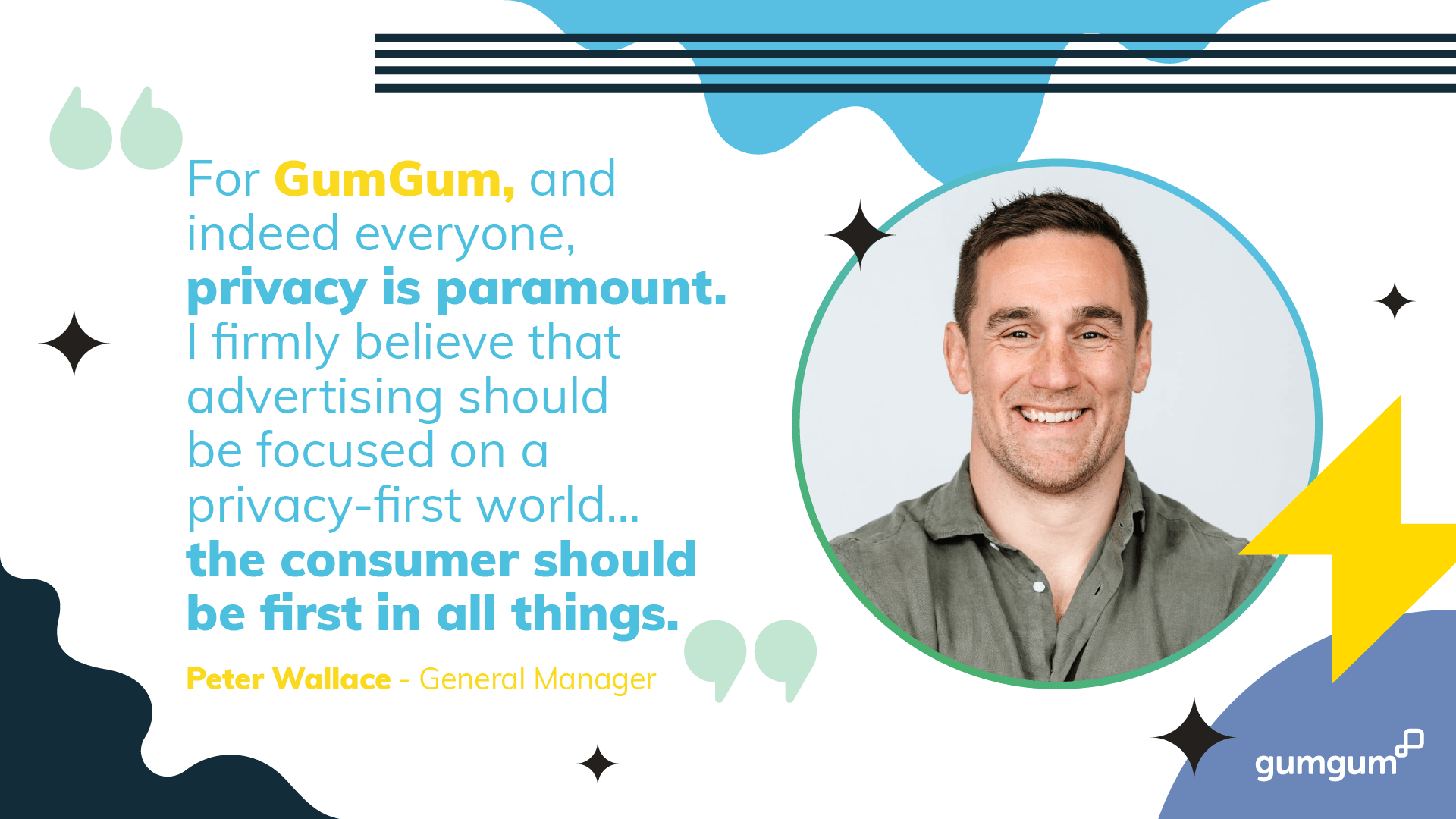
PW: For GumGum, and indeed everyone, privacy is paramount. I firmly believe that advertising should be focused on a privacy-first world… the consumer should be first in all things. Let me be very clear, audiences do not want their data shared, consumers want natural, unobtrusive advertising, and therefore putting privacy first is a fundamental need.
MM: How important is a user-first approach to marketing, and how can advertisers do it well?
PW: There are a few hard and fast rules here. First of all, don’t use personal data. There’s no need, and users don’t want to share it. Serve fewer ads, but better ad experiences. Historically, we’ve bombarded audiences with many thousands of ads on a daily basis, the majority of them are ignored – we’ve all got a finite amount of attention to give, after all - so you’ve got to deliver better experiences and offer more meaningful moments for consumers. Better user experiences equal better business outcomes.
MM: What areas of ad tech are on the up?
PW: I’m really excited about the advent of new channels like gaming and CTV (Connected TV), and the opportunities they offer advertisers and publishers. Ultimately, contextual advertising is relevant for all channels because it allows advertisers to analyse all types of data signals within an online environment, from text and video to image and audio. For gaming and CTV in particular, creative is critical. It’s important not to employ overly intrusive formats, such as big interstitials that will detract from the user experience, and the industry needs to consider how to integrate ads seamlessly into gaming and TV experiences.
The measurement of all this is also very interesting. Clearly, we have to think away from the ‘click’. While this metric retains some relevance in a desktop environment, for emerging channels like CTV and gaming it is simply not fit for purpose, and tells us nothing about the users that may have seen an ad without physically engaging with it. Conversely attention – and the value we place on it – offers the most exciting opportunities regarding measurement.
MM: Where do you stand on the metaverse and the opportunities it presents?
PW: Haha, well… whatever your view, it looks like the metaverse – when it eventually hits the mainstream – is a platform that’s likely to stay, and we’re excited about the potential it offers the digital marketing world. It is going to be really interesting to see how advertisers approach and engage users in the metaverse, because this is an environment unlike any that’s come before. Adapting to this new platform, with its unique user experience and variety of different environments, will not be easy but it presents huge rewards for those that get it right. In short, amazing opportunities await and advertisers need to be ready, but that time is not here yet.
MM: Finally, what is your biggest takeaway from DMEXCO 2022?
PW: The big takeaway for me is how critical it is to work with context, especially in light of the privacy challenges the industry is facing. And, work with the best type of context. Not all context is created equal, and if you can identify the best context for you and your audience you are going to drive performance. GumGum’s advanced contextual intelligence platform (called Verity) helps advertisers and brands do this by analysing a huge variety of triggers, including video, audio and imagery, and is 1.7x more accurate than other contextual vendors.
MM: Will we see GumGum there again next year?
PW: Of course, one hundred percent! GumGum has been coming to Cologne for years, and we don’t want to miss one of the largest events of the European scene. We’ll see you all in 2023.
Also published in: Mobile Marketing
More from our team & client partners