

Minor Tweaks Can Produce Major Environmental Wins For The Advertising Industry
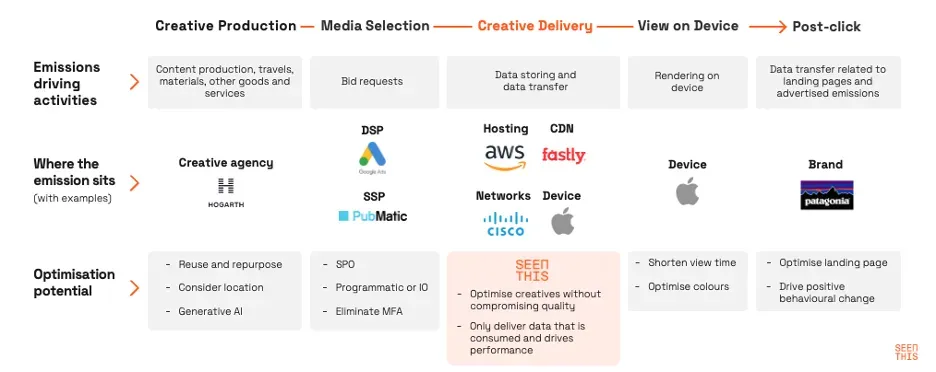
Reducing global climate emissions to a sustainable level requires such an overwhelming amount of work that the problem can feel disconnected from our daily lives.
At work, becoming more sustainable can seem particularly daunting. Companies rely on factories and trucks, computers and offices. Becoming less reliant on these things requires capital investment.
And many people wonder if smaller-scale changes, like walking to work instead of driving or having employees compost their food waste at the office, will really have an impact.
The good news is research shows that people who commit to small changes have the most long-term success in implementing major changes.
And small changes can really add up. If people in Europe and the UK ate vegetarian for just two days a week, it could reduce annual CO2 emissions by 81 million tons.
Similarly, in advertising and marketing, there are many small changes that can be transformative. And they don’t require massive shifts or huge investments – just a willingness to try something new.
Media production and creative
In media production, any creative brief that doesn’t allow for sustainable choices is not an acceptable brief. Agencies should try to reuse content whenever possible, reduce resources and travel needed for photo shoots and use generative AI to reduce production emissions.
Advertisers are also in a unique position to drive behavioral change. Just consider the positive impact ads can have by portraying someone on a bike vs. in a car.
Tools like AdGreen can help companies measure emissions from advertising production to optimize aspects like travel, accommodation, location and materials used. Such measurement helps advertising partners become more aware of how their practices are impacting each other’s overall emissions.
Another way to approach creative more sustainably is adapting ad creatives for their intended use and optimizing them for the highest quality that can be perceived by the human eye. Precompression might not always be a good idea, as many platforms automatically optimize creatives for optimal delivery based on their own prerequisites.
Marketers can also avoid audio if it’s not needed and weigh the impact of other assets, like fonts, players, etc. Creatives with longer view times consume more device power when they’re displayed. And darker colors may use less energy, depending on the screen type (e.g., OLED).
Media planning and buying
Media buying, especially digital media buying, can be a major source of advertising emissions – so much so that campaign emissions need to be a KPI alongside performance.
Across the supply chain, marketers can implement best practices, like supply-path optimization, to avoid wasted bids and opt for inventory with more sustainable publishers and eliminate MFA sites to prevent content waste. Reducing wasted impressions with more stringent viewability measurement often improves campaign outcomes while minimizing emissions. A win-win.
A good mantra is “only send data that drives performance.” Marketers should also steer clear of data waste in asset delivery and use efficient technologies that can control data transfer, such as streaming. The key is to make sure the data sent is only what is actually consumed, adapted for user conditions. Avoid traditional download technology, keep buffering and preloads at a minimum, optimize “lazy loading” and make sure ads stop loading when they’re out of view.
Measurement is its own reward
Sustainability doesn’t have to compete with performance. More efficient campaigns can be less expensive and deliver fewer impressions that no one sees. Using ad technology that is more efficient can also produce higher-quality advertising experiences for viewers.
Rather than choosing between “green” and “performant” campaigns, marketers can lean into changes that satisfy both requirements.
Marketers have outsized influence in the advertising ecosystem because of their position as the budget holder. They should prioritize partnerships with companies that measure their emissions and have validated reduction targets. And they should pressure partners that perform well but aren’t sustainable to commit to sustainability.
Marketers should also share their results with partners and even peers. Showing that emissions-reducing choices don’t necessarily require major sacrifices in spend or performance can be the catalyst to drive even more change.
Also published in: AdExchanger
More from our team & client partners