
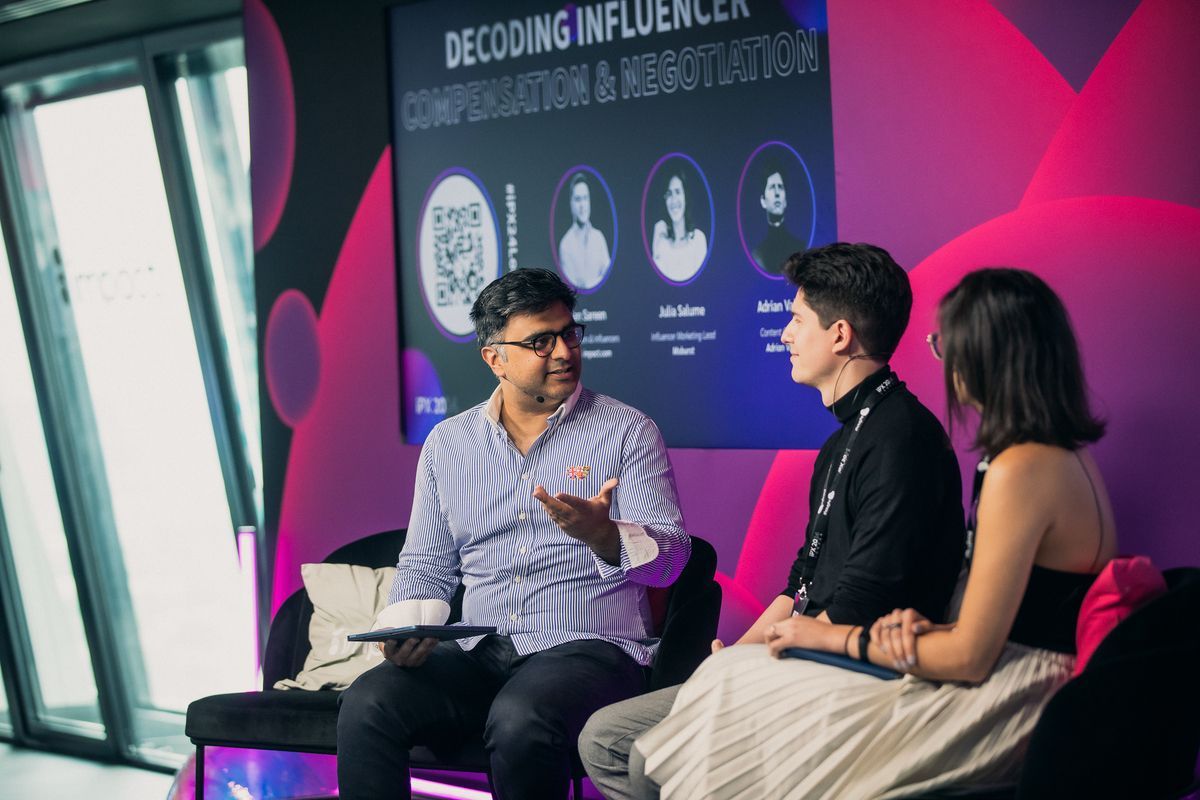
San Sareen, RVP at impact.com, discusses fair pricing for influencer campaigns at iPX 2024 London
Setting a fair price for a product or service has always been a complex process. It is based at a fundamental level on issues of supply and demand, but also takes other factors into account, such as the quality of the product or service being sold, any unique aspects to it, and, in some instances – let’s be honest – what the seller thinks they can get away with.
In the world of influencer marketing, the question can be even more contentious, with brands able to choose from literally thousands of influencers and creators when planning their next campaign, and influencers able to identify dozens of brands in any given sector who might benefit from working with them.
So how do influencers and the brands that hire them arrive at a price for their services that both sides are happy with? This is a subject I took time to explore at impact.com’s recent iPX 2024 event in London, with content creator Adrian Valia and Júlia Salume, Influencer Marketing Lead at digital marketing agency Moburst.
An evolving market
From the influencer’s perspective, payment has evolved somewhat from the early days of influencer marketing, when the only reward an influencer might expect in return for endorsing a product would be to get to keep the sample sent for them to assess or review. Adrian told delegates he used to get “all sorts of offers in terms of payment”, but that flat fees and commission are now the norm.
When setting a price, he said that his primary focus is on the deliverable, on how long it would take to create the post and what usage rights the client is looking for. He then rolls everything into one price for all of it. “I don’t like lots of add-ons,” he said. “I would rather give the brand maximum value, and most people would rather pay the higher price [that includes] everything. Clients who work with me on a longer-term basis can expect reduced rates.”
“There won’t be a huge difference,” he said. “You need a baseline price because you have to cover your production costs, but in any business, when you buy in bulk, you get a better deal.”
The critical issue, he added, is the fit between creator and brand. “You have to think about who you are partnering with and do something short-term first, to see if they are the right fit for you. The product and content are the main factors, so if the product isn’t great, I can’t do a great job of showcasing it, as I won’t be excited about it. The client has to love what I’m doing and have faith in my content style so that even the content produced for a brand collaboration sits true and authentic with the ongoing style of content production which my audiences expect.”
Other elements
From the client perspective, there are other elements to the price than just the monetary value.
“There are elements that add value that do not cost more,” Júlia told delegates. “Timeframe is one – can you deliver the content earlier if that would help me?” Responsiveness is another key issue for Júlia. “If it takes me three emails to get a quote, I’m not going to wait,” she said.
Júlia also said that for the right influencer, there is always room for negotiation on price. “Pricing has an influence, but if I really want the creator I will try to negotiate, because I have a budget for the whole campaign, so I can shave some off somewhere else to pay more for someone I really want to work with,” she said.
Sometimes, a brand likes an influencer’s work so much that they may request exclusivity. But both Júlia and Adrian agreed that this is rarely a good idea. “It’s more the ego of the brand,” Júlia said. “If you have a good product, people like to compare things and if they can’t do this, it’s harder to make a decision. So exclusivity does not make sense.”
From Adrian’s perspective, it just doesn’t work. “Most of my content is based around innovation and I need to test a lot of tech and a lot of products, so I’m not going to advocate for one brand for a whole year – it would not make sense.”
The revisions issue
Another contentious issue is revisions. How many are reasonable?
“If the client needs more than two, something has gone wrong,” Adrian said. “And if they are trying to micro-manage the content, that’s not a great idea. At some point you have to say, ‘this is not going to work.’ In any event, this should all be discussed and agreed beforehand.”
For Júlia, frustration comes when she needs revisions, asks the creator to implement them, and they don’t, or if they do, they take care of the quick fixes, and ignore the ones that would need a lot more work.
“A lot of creators don’t say anything about revisions, and then they don’t do them all and that takes me a lot of time keep to going back to ask for them,” she said
Ultimately, both Adrian and Júlia agreed that there is more to assessing how much a piece of work is worth than the fee the creator is paid for it.
“When evaluating a creator, don’t look just at the price, but at the overall value, and think about both the production and distribution costs,” said Júlia. “In our ever-evolving landscape, where customer behaviour is drastically changing, for brands to stay relevant and not risk losing their customers’ attention, ensuring that the value of their contribution is accurately calculated is more important than ever.”
And Adrian’s final word for creators: “Do your research, and know what your production costs are, so you know when to take a deal and when to walk away from one.”
Also published in: Mobile Marketing Magazine
More from our team & client partners