UK considers social media ban for under-16s as Australia sets global trend

The U.K. government is exploring whether to ban social media use for children under 16 — the latest sign of a growing wave of global regulation that could reshape how advertisers reach young audiences today and adult consumers tomorrow.


Following Australia’s landmark ban on social media use for under-16s last month, U.K. Technology Secretary Liz Kendall on Monday unveiled a new set of proposals that will undergo public consultation. These are a potential under-16 ban, restrictions on features like infinite scrolling, as well as curfews to curb excessive use.


The U.K. isn’t alone in exploring a social media ban for minors. France, Spain and Greece are already debating their own approaches, while in the U.S., California is examining state-level restrictions inspired by Australia.

For global advertisers, the question is no longer whether Australia’s example will spread — it’s how broadly and at what speed.

A deeper concern for advertisers looms as well: If an entire generation grows up off-platform, will social media targeting still be as effective once those users become adults?


"It’s about the direction of travel. Social is becoming harder to scale reliably, harder to measure, and riskier to depend on," said Suzanna Chaplin, CEO and Founder at esbconnect.


"Social won’t disappear, but it should move from ‘default spend’ to ‘selective spend’, while budgets diversify into partnerships, podcasts, retail media, and even postal where it makes sense. The future is less about chasing attention in feeds, and more about owning the relationship end-to-end.”


Australia may be just the start

The U.K. consultations come ahead of a parliamentary vote this week on a bill amendment that would ban social media for minors within a year of passing, likely forcing the government’s hand regardless of the consultation outcomes.


Early results from Australia illustrate the scale of impact: Platforms like YouTube, TikTok and Instagram collectively deactivated nearly 4.7 million accounts belonging to under-16s in the first month. Meta alone removed nearly 550,000 accounts.

So far, Australian marketers have reported no dramatic drop in performance. But many told Mediaweek that campaign strategies were already shifting. CTV is particularly well positioned to absorb viewership and ad dollars migrating from YouTube.


Before the ban, an estimated 624,000 14- and 15-year-olds in Australia were active on social media, making logged-in social targeting a central pillar of many youth-focused media plans.


“Being a child should not be about constant judgment from strangers or the pressure to perform for likes. Children need space to grow,” wrote British Prime Minister Keir Starmer on Substack. “We will work with experts to identify the most effective measures we can take to do more. As I have been clear, no option is off the table.”


Also published in: The Current

More from our team & client partners
The Credibility Premium: Why AI has just made riding solo impossibly expensive
August 14, 2026
For the last twenty years or so, brands have been rightly obsessed with their search rankings. But in the time it takes for consumers to completely reinvent their online research habits – which it turns out wasn’t very long at all – it has become clear SEO was the easy part.
Creator marketing: The growth engine brands can no longer afford to ignore
August 13, 2026
There was a time when creator partnerships were considered a ‘nice-to-have’ in supporting a marketing campaign. They were great for achieving an extra few likes and comments across social platforms, but rarely were creators considered central to an ad campaign, never mind a long-term growth engine.
Rob Hall, CEO of Parallel: “Digital Twins and ‘Customer Suitability’ can power better decisions
August 12, 2026
While brand safety and brand suitability help advertisers avoid harmful environments and align campaigns with brand values, Customer Suitability asks whether a video placement is right for the customer viewing it. Parallel combines proprietary AI, large-scale data sets and digital twins – synthetic replicas of consumer
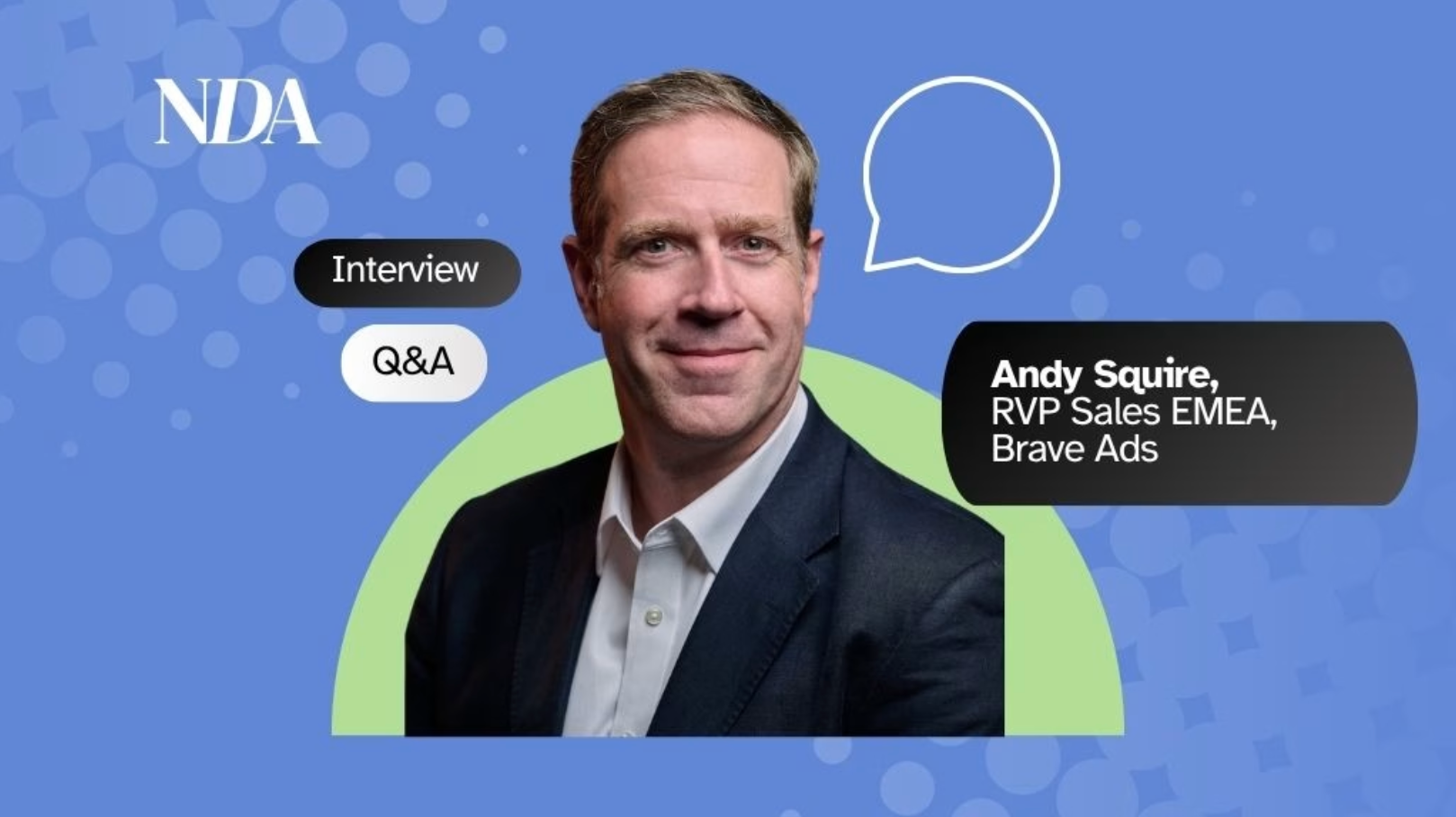
Andy Squire, Brave Ads: “AI replacing traditional Search? It’s not as simple as that”
August 10, 2026
NDA spoke recently with Andy Squire, RVP Sales EMEA at Brave Ads, about the rapid evolution of the Search marketplace and how marketers can reassess their strategy for discoverability…
Brandtech’s Jellyfish Launches AI Ads Optimisation in Share of Model™
By Ren Bowman August 6, 2026
Jellyfish, a global digital marketing leader within The Brandtech Group, today announced AI Ads Optimisation, a major expansion of the paid media optimisation capabilities within its proprietary Share of Model™ Platform. The update extends beyond the existing Google Ads integration for Performance Max to generate media
Tinder ‘Dump Traditional Dating’: Alternative fourplay | The Digital Voice™
By Ren Bowman August 6, 2026
Oh the joys of online dating…are there any? Not according to many of those we know but maybe, just maybe Tinder has the answer, with its Double Date feature.
How adtech CEOs should use LinkedIn in 2026: a visibility playbook for the AI world
July 25, 2026
Everyone knows that CEOs should be using LinkedIn. But so often it’s something they promise they’ll get around to after the board meeting, after the investor update, product launch, client pitch, or one of a hundred other urgent tasks competing for attention. It's time to stop treating LinkedIn as a nice to have.
Stop the scroll: how to win at SEO in the age of AI search | The Digital Voice™
May 14, 2026
How people seek and find information, optimising for the front page of search engines is no longer optimal. GEO has made technical SEO more important than ever.
Journalism and Gen-Z: What is the future of the profession, and will AI be friend or foe?
May 14, 2026
As of 2026, approximately 45% of workers have AI anxiety: they fear that in the near future AI will make their job obsolete. From the perspective of a Gen-Z student beginning to consider what her career might look like, Tabitha Bonner looks at the adapting role of journalists.
Show More