

Unwrapping engagement: how gamified TV ads make holiday viewing interactive
As the festive season lights up living rooms across Europe, TV has never been more exciting. From holiday specials to year-end blockbusters, viewers are spending more time than ever on smart TVs – and brands now have the opportunity to make ad time a moment of fun and interaction. And gamification is the way to do it.
When Domino’s rolled out the first European GameBreaks campaign this Autumn, viewers eagerly joined in, driving a 3.84% engagement rate and a 31% uplift in brand consideration.
Research from MediaScience in the US found that 89% of viewers preferred GameBreaks over traditional commercial breaks. When taken together, the takeaway is clear: play can transform TV moments into memorable experiences that brands can use to capture attention.
Turning busy TV time into a moment of play
Insights from viewership on Samsung Smart TVs in Europe show that streaming already makes up more than half of daily TV viewing, with the rest split between linear channels and gaming. Given the array of apps, channels and streaming options, the classic 30-second ad has to compete for attention like never before.
Gamified formats turn this challenge into an opportunity: by using the remote as a playful tool, they transform attention from a passive moment into an engaging experience that viewers can actively enjoy.
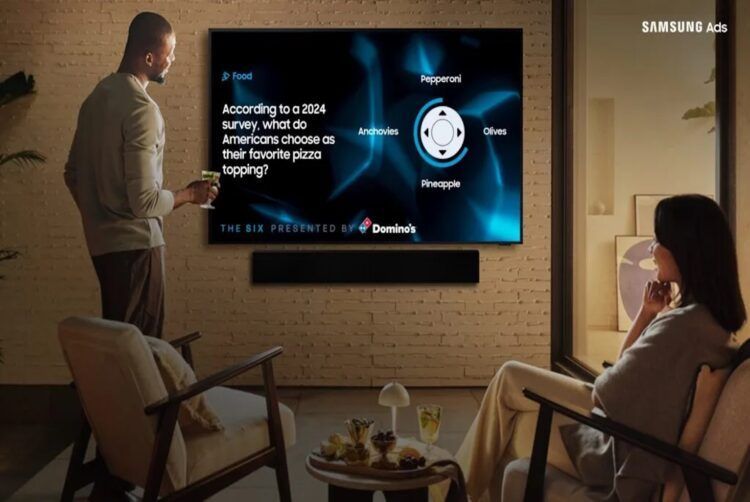
During the Domino’s GameBreaks campaign, viewers were invited to join a quick pizza trivia quiz before seeing a short brand message. The impressive engagement shows that viewers leaned in and played along, turning a typical ad break into a lively, interactive moment.
The 31% uplift in brand consideration highlights that this engagement was deeper and more meaningful than a standard impression. The 53% lift in unaided brand recall shows that play embeds brands more deeply in viewers’ minds. At the same time, the overwhelming preference for GameBreaks over traditional ad breaks proves that audiences welcome a fun twist during TV time.
Inside the Domino’s GameBreaks experiment
The first gamified spot was built around something everyone can relate to: choosing a favourite pizza topping. Viewers were asked a multiple-choice trivia question about the most popular topping in the US, answered using their TV remote, and were immediately shown whether they were right or wrong before seeing the brand spot. The mechanic is deliberately straightforward – there’s no need to download an app, register, or scan a QR code. The game fits inside the first slot of a premium ad pod, preserving the familiar rhythm of the break, while changing its feel.
What makes it work is authenticity. Crucially, the creative is rooted in the brand, and pizza trivia feels authentic to Domino’s, keeping the tone light and sociable. The subsequent short ad can then focus on a specific product or message, having already captured attention and created an emotional payoff, whether viewers got the answer right or wrong.
Designing festive gamified CTV campaigns
The Domino’s case highlights three key principles for advertisers considering gamification on CTV:
Simplicity: Keep it intuitive – make it playable with a few remote clicks and accessible to everyone, from kids to grandparents
Relevance: Make the content and experience fit the brand
Respect users’ time: Keep it short, clear, and rewarding. When viewers immediately understand and enjoy the interaction, opt-in engagement comes naturally, like unwrapping a little gift in the middle of the break.
A playful tool for a festive season
Gamification may not replace every ad format, but it shines when brands want to stand out. Seasonal launches, holiday peaks, and family viewing occasions are perfect opportunities to turn a break into a shared, interactive moment. By shifting focus from simple reach to meaningful attention and engagement, brands connect more deeply with viewers.
In a fragmented landscape and amid rising audience expectations, early results show a valuable lesson: when TV advertising becomes something viewers can play with, rather than just watch, brands earn a place in the living room – like a joyful present under the Christmas tree.
Also Published in: The Media Leader
More from our team & client partners