
Why AI alone isn’t a USP in advertising
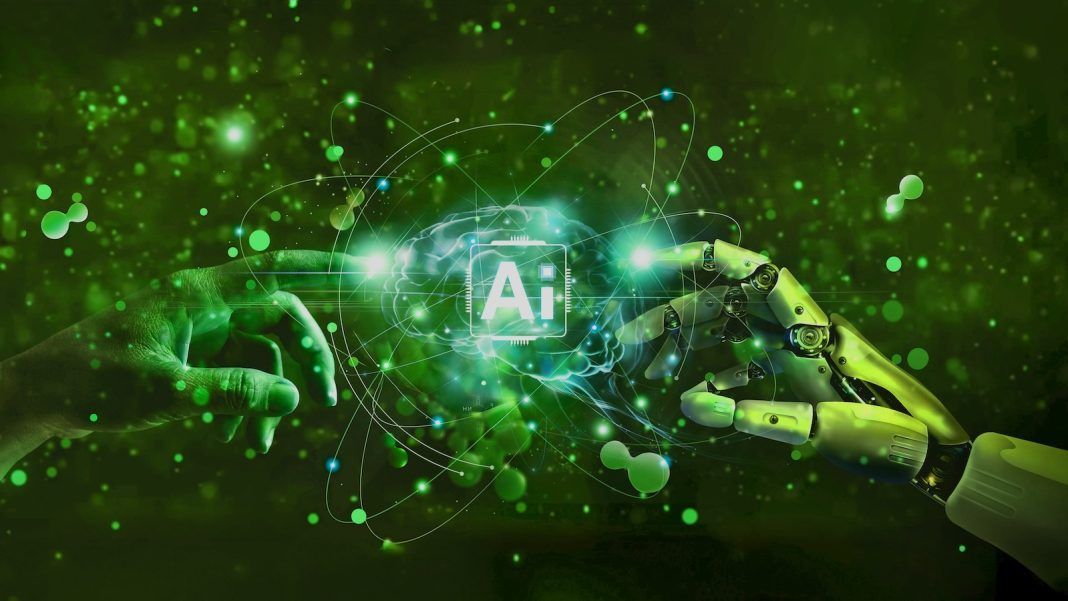
In a landscape increasingly driven by automation and algorithms, it’s tempting for brands to pin their point of difference on AI. But in today’s crowded market, that’s no longer enough.
David Nelson, Co-Founder and CEO of leading programmatic platform Limelight Inc., argues that while AI is undeniably a powerful enabler, it’s not a differentiator.
True standout success, he says, lies in how humans harness it — not in the tech itself.
Back in 2004, when a US defence research agency offered a $1m prize for anyone who could create a driverless vehicle capable of negotiating 150 miles of desert between California and Nevada, most of us probably would have supposed our roads would be full of driverless cars within a couple of decades.
In fact, two decades on, there are still no self-driving cars on British roads, and relatively few around the world.
Safety concerns, quite rightly, are the blocker. But there’s also the persistent suspicion that, when it comes down to it, people might just prefer to drive their own cars.
There’s a parallel here with AI in the programmatic advertising space. No one would suggest that it has failed to take off – it is already all around us, and is a remarkably powerful, transformative force that empowers SSPs, DSPs, networks and platforms like our own.
But while AI may be the engine, it is evident that we’ll all be better off if we don’t put it behind the wheel.
Things the AI doesn’t know
In a market where even the most advanced technology rapidly becomes commoditised, one thing is immediately clear: if everyone’s USP is AI, then no one has a USP.
This is no anti-technology diatribe – the fact remains that if AI doesn’t give you the ability to overlay your own individual, human knowledge, then you have a problem.
We talk a lot with the ad network partners who use our platform about what makes them each unique. How do they differentiate in the market? Why would someone buy their inventory instead of somebody else’s? How do they manage their supply path and their demand, and optimise through their operations team?
These are all critical differentiators for ad networks. Because what matters, more fundamentally than technology – though of course that needs to be there, humming cleverly in the background – is the fabric of trading: what your supply is, what your demand is, who your partners are.
Even in a business as technologically sophisticated as programmatic advertising, there are things that an ad network gains through personal relationships that AI couldn’t easily know.
How to marry artificial and human intelligence
First, you need to make it abundantly clear to humans exactly what the AI you’ve given them is doing. Black boxes, however remarkable their inner workings, don’t help anyone run a business.
There needs to be transparency if humans and machines are going to work effectively together.
Likewise, understanding the machines doesn’t help you a great deal if you can’t direct them. So you need to give your teams the ability to tailor and configure the way their AI works. In that way, a network can still bring its USPs, its values – the things that make it special.
If you can bring powerful AI to their business, but complement it, direct it and fine-tune it with real, human intelligence – and while you are at it, use AI to automate that process as well – then you begin to see the best of both worlds.
What do we stand to lose?
What scares people about AI, in all contexts, is the sense of losing control. If you can restore that sense of human governance – the ability to set limits and tolerances – then you begin to see AI as a powerful tool for human hands, rather than an unnerving robot master.
For that reason, it is critical that we have people in charge of driving the car – rather than handing the steering wheel to AI and letting the computers get on with it.
This is especially true if you want to survive in a world that is dominated by giant companies that will swallow you up if you can’t distinguish your values.
If everyone uses much the same AI, with the same capabilities, then in the future there will be no creative ad networks doing smart, clever things, making people’s ideas come to life, and making the uniqueness of these smaller companies very real and tangible.
And if those qualities cease to exist, then all we are left with is Google and Facebook.
Machine learning is only as good as humans it learns from, and this process of human-directed learning is necessarily an ongoing one – which is why a combination of technology and human power will continue to be important.
It is in all our interests to enable that, and to preserve the human touch in what we do. Because in the end, that’s the part that really makes the difference.
Also published in: Mediashotz
More from our team & client partners